
Barley Market Report: Smaller North American Crops and Low Malt Selection Tighten 2026/27 Supplies
Estimated reading time: 7 minutes
This barley market report was provided by Leftfield Commodity Research.
Harvest 2026 was slow and wet across much of Saskatchewan, and the first official production numbers are now in. LeftField Commodity Research’s October outlook looks at what StatsCan and USDA are signalling for supply, why malt selection is the story to watch, and what it could mean for feed and malt barley prices in the months ahead.
Key Takeaways
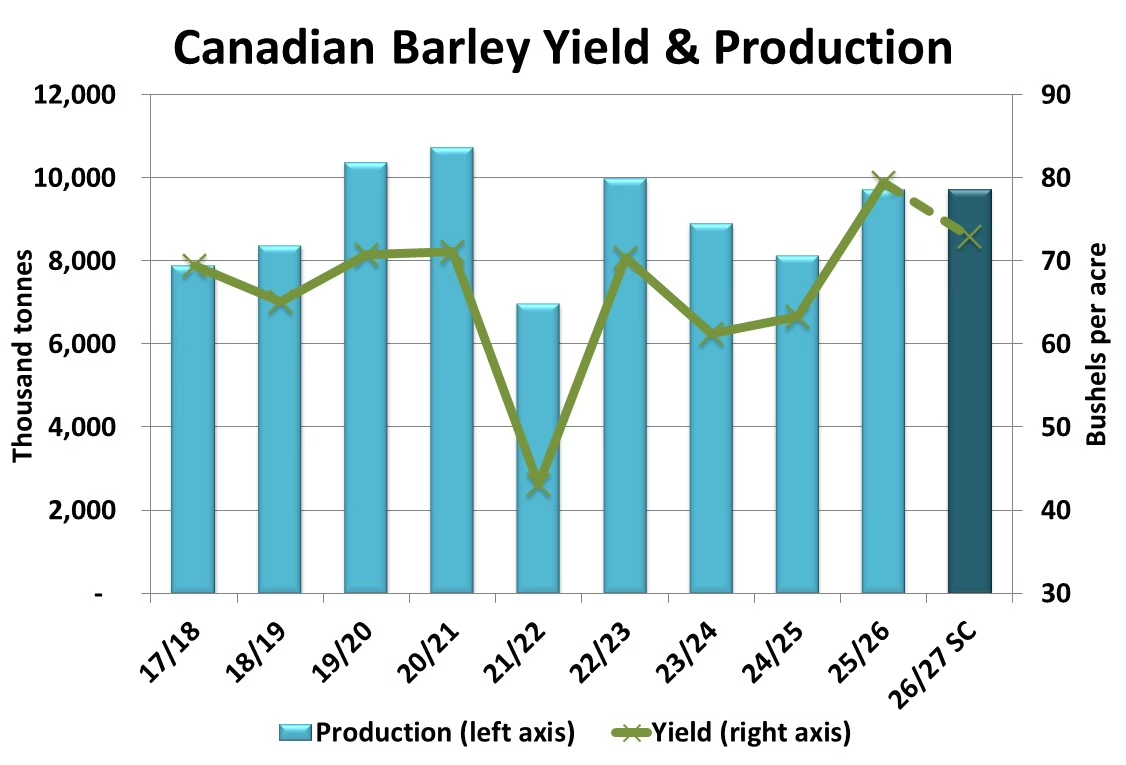
- LeftField reports StatsCan pegs the 2026 Canadian barley crop at 9.71 mln tonnes, essentially flat from last year, but the estimate predates the difficult September harvest and the risks lean toward a smaller number in December.
- A July 31 carryover of 940,400 tonnes, the lowest in three years, leaves total supplies several hundred thousand tonnes below last year. LeftField expects exports to see most of the rationing, falling from 3.50 mln tonnes to 3.0 mln or less.
- Early provincial estimates put Saskatchewan malt selection at roughly 18% of the crop, the lowest since 2019 and far below the usual one-third, and price premiums for quality are rising.
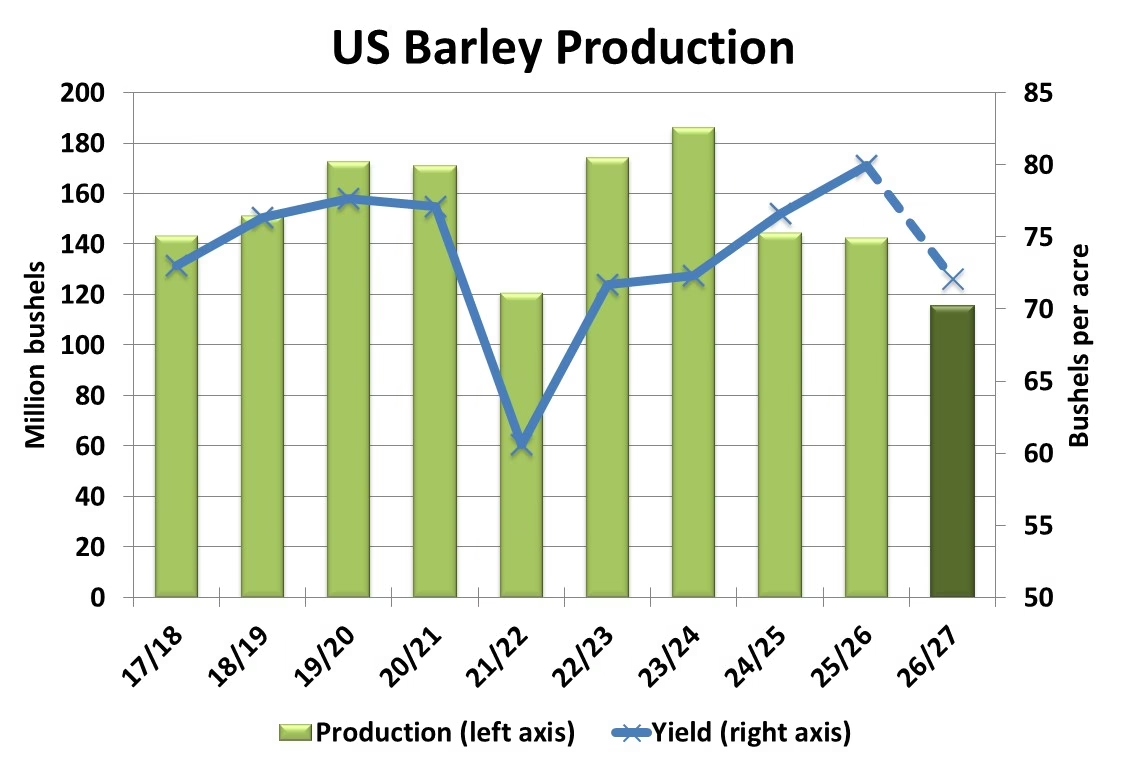
- USDA cut the US barley crop to 116 mln bushels from 140 mln, a crop small enough that it could pull in more malt barley imports.
- LeftField’s read: both feed and malt barley prices are likely to see more strength in the months ahead.
StatsCan and USDA point to less barley this year
In mid-September, StatsCan released its first model-based estimate of 2026 production, while USDA provided an updated figure on September 30th. Together, the two reports gave a fresh perspective for the supply side of the barley balance sheet, and both point in the same direction – less barley than last year in Canada and the US, at a time when the demand signals remain strong.
Canada: StatsCan’s first model-based estimate
StatsCan pegged the 2026 Canadian barley crop at 9.71 mln tonnes, essentially flat from last year, as higher seeded area mostly offset a yield of 72.9 bu/acre versus the 2025 record of 79.4 bu/acre. It’s worth remembering this estimate is built using data to the end of August and prior to the frustrating September harvest. The difficult conditions may not have affected yield a great deal, but StatsCan assumes a normal percentage of seeded acres get harvested, while it’s likely abandonment is higher as some of the wettest areas of Saskatchewan last spring and this fall are key barley-growing regions. In other words, when the survey-based update arrives in December, the risks lean toward a smaller number rather than a bigger one.
Supply and demand: exports likely to take the squeeze
Stacking that crop on the July 31 carryover of 940,400 tonnes, the lowest in three years, leaves total supplies several hundred thousand tonnes below last year (with the decline even greater if the final crop ends up smaller than initially reported). This means total usage needs to shrink in 2026/27. While feed barley prices are well off the recent lows, they remain more competitive than other feed grains in livestock rations, which will keep demand strong. The result is that exports will likely see most of the rationing, falling from last year’s 3.50 mln tonnes to 3.0 mln or less, at the same time the global barley market is tighter as well.
Quality: malt selection is the story to watch
Quality is also an important part of this year’s production story. The Saskatchewan harvest was the slowest on record in mid-September before a stretch of good weather finally let combines roll, and the wet conditions took a toll on grades. Early provincial estimates put malt selection in Saskatchewan at roughly 18% of the crop, the lowest since 2019 and far below the usual one-third, although Alberta has fared a little better. The low supply of barley making malt grade has led to some reports of buyers loosening specs and accepting samples that would be rejected most years. Some higher quality barley is also making its way into feed channels, further squeezing supply. Whether enough malt barley gets harvested to meet core demand is a genuine question this year, and has resulted in rising price premiums for quality.
United States: a historically small crop
USDA’s latest update reinforced the tightness from the US side. The American barley crop was cut to a historically small 116 mln bushels from the previous estimate of 140 mln, below even the drought-reduced 2021 harvest, on a combination of lower yields and fewer harvested acres. A crop that small could pull in more malt barley imports at the same time Canadian malt supplies are squeezed.
The outlook: a tight North American market
Smaller supplies in both Canada and the US sets up for a tight North American barley market for the 2026/27 season. And while USDA showed more old-crop corn stocks than the market was expecting, prices remain well above year ago levels in anticipation of some tightening for the coming season, which supports feed grain prices overall. This points to both feed and malt barley prices likely seeing more strength in the months ahead.
Market analysis provided by LeftField Commodity Research. October 2026 outlook.
Related Barley Market Reports on BarleyBin.ca
- Barley Market Report: USDA and StatsCan Update 2026 Barley Acreage Estimates – The acreage side of this year’s production story, from the earlier StatsCan and USDA updates.
- Barley Market Report: Early Guesses for 2026 Canadian Barley Production – How early production expectations compare with the numbers now in.
- Barley Market Report: Canadian Barley Stocks Tighten Ahead of 2026/27 Marketing Year – Background on the carryover and stocks picture behind this month’s supply discussion.
- Barley Market Report: Tighter Global Supplies Set to Support Canadian Barley Prices in 2026/27 – The global supply backdrop that LeftField also mentions this month.
Frequently Asked Questions
StatsCan’s first model-based estimate pegs the 2026 Canadian barley crop at 9.71 mln tonnes, essentially flat from last year, with a yield of 72.9 bu/acre versus the 2025 record of 79.4 bu/acre. LeftField notes the estimate uses data to the end of August, before the difficult September harvest, so the December survey-based update could come in lower.
LeftField reports that early provincial estimates put Saskatchewan malt selection at roughly 18% of the crop, the lowest since 2019 and far below the usual one-third. Alberta has fared a little better. With less malt-grade barley available, some buyers are reported to be loosening specs and price premiums for quality are rising.
LeftField explains that smaller total supplies, including the lowest July 31 carryover in three years, mean total usage needs to shrink. Because feed barley remains more competitive than other feed grains in livestock rations, demand should stay strong, so exports will likely see most of the rationing, falling from 3.50 mln tonnes to 3.0 mln or less.
USDA cut the American barley crop to 116 mln bushels from 140 mln, below even the drought-reduced 2021 harvest. LeftField notes a crop that small could pull in more malt barley imports at the same time Canadian malt supplies are squeezed, adding to the tightness in the North American market for 2026/27.
LeftField says smaller supplies in Canada and the US set up a tight North American barley market for 2026/27 and points to both feed and malt barley prices likely seeing more strength in the months ahead. This is LeftField’s market analysis, not a SaskBarley price forecast, and it does not replace advice on your own marketing plan.
About the Author
| LeftField Commodity Research is an independent, data-driven research firm covering Canadian grain, oilseed, pulse, and special crop markets. Founded in 2010 by Chuck Penner, who has nearly 30 years of experience across the Canadian grain industry, and joined by Senior Analyst Jonathon Driedger in 2019, LeftField is based in Winnipeg, Manitoba. Its analysis is built from farmgate-level knowledge through the full value chain, aiming to explain the “whats and whys” behind market moves rather than offer trading calls. |