
Barley Production Resources
From managing FHB and understanding chit, to battling herbicide-resistant weeds and optimizing your natural air drying (NAD) systems, SaskBarley provides resources to make it easier for you to grow quality barley in Saskatchewan.
Search the categories below:
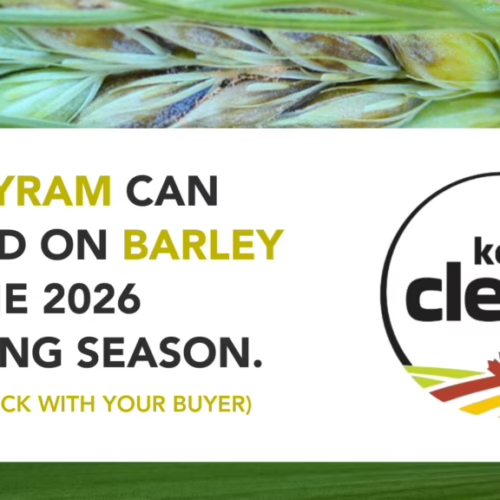
Fluopyram Now Available for Barley in Canada
Fluopyram, sold as Prosaro Pro, is now a viable option for Canadian barley farmers after key export markets adjusted their maximum residue limits (MRLs). Learn more…
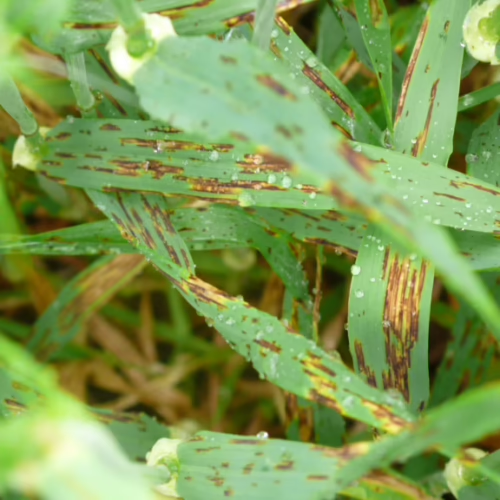
How to Identify Barley Leaf Diseases: A Field Guide
Learn to tell scald, net blotch, spot blotch, and bacterial leaf streak apart in the field — and why correct ID drives smarter spray decisions.
S3.E7 – Hidden Threats: How to Identify Barley Leaf Diseases in the Field
Learn how to identify barley leaf diseases in the field, including scald, net blotch, spot blotch, and bacterial leaf streak. Practical agronomic insights for barley growers and agronomists from The BarleyBin Podcast.

S3.E5 – The War On Fusarium Head Blight Continues
In S3E5 we follow up on S1E2 to explore how Fusarium Head Blight remains a major threat to barley growers. Mitchell Japp and leading researchers discuss FHB risk, spray timing, mycotoxins, and fungicide resistance.
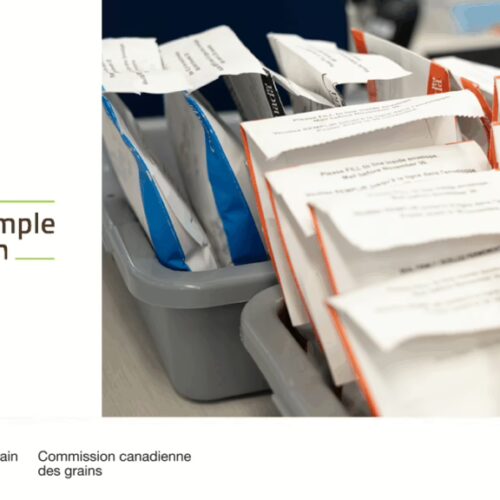
Harvest Sample Program Deadline and Drop-Off Options in Saskatchewan
The Canadian Grain Commission’s Harvest Sample Program is still accepting submissions. The deadline is December 31.
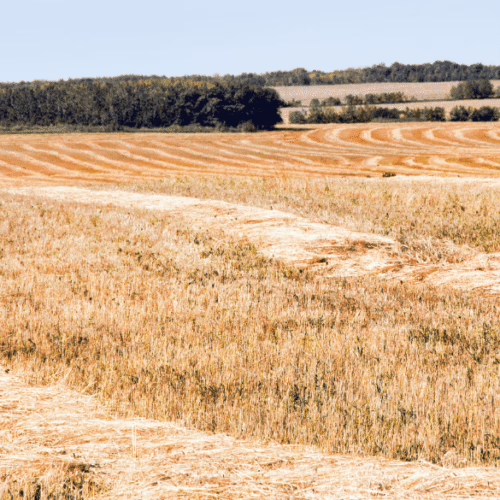
Swathing vs. Straight Combining Barley
Discover the pros and cons of swathing vs. straight combining barley to produce marketable malting barley. Learn why desiccants like pre-harvest glyphosates are not allowed and how timing, quality management, and equipment availability play a role in your harvest decision.
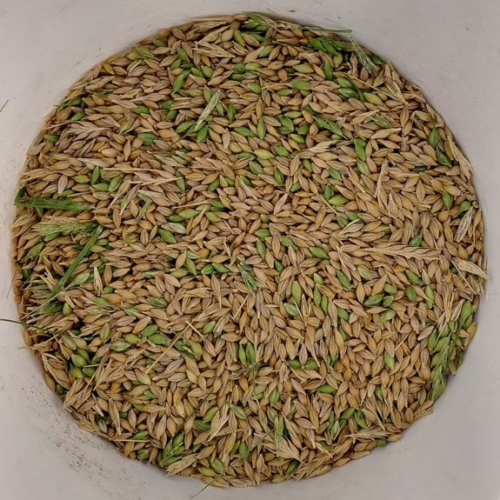
Know Your Malt Barley Specs: What Maltsters are Looking For
Brewing a premium malt barley crop starts with understanding end-user specs. Here’s what maltsters are looking for when selecting for malt.
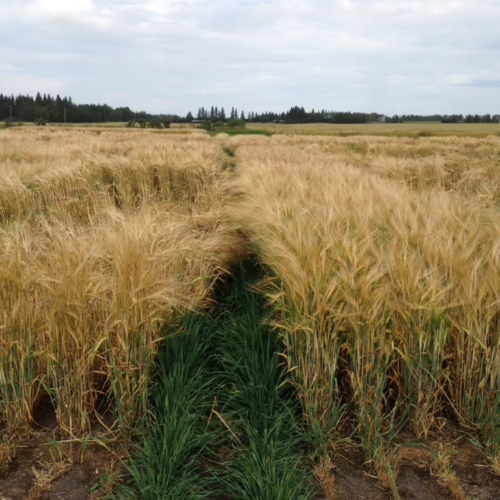
Plant Growth Regulator (PGR) Options for Barley
Plant growth regulator options for barley in Western Canada, comparing Moddus and Manipulator for lodging control, ideal growth stages for application, and when PGRs should or should not be used.
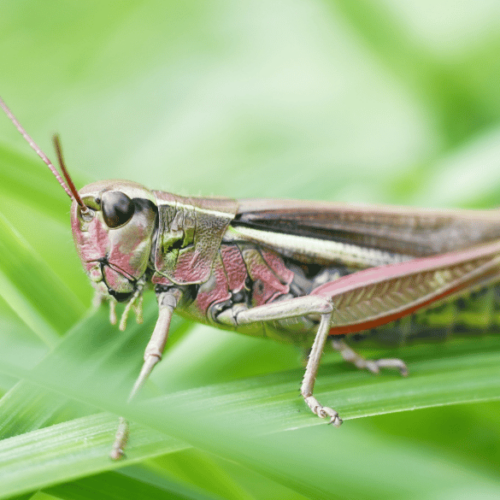
Insecticide Options for 2025
Explore this quick reference guide to insecticide options for 2025 tailored to Saskatchewan farmers. Get threshold guidelines, crop-specific recommendations, and IPM strategies to protect your yield.
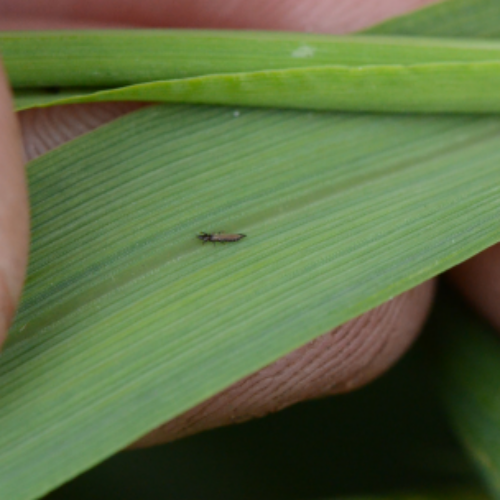
The Trouble with Thrips: How to Identify and Manage This Cereal Pest
Dr. James Tansey of the Saskatchewan Ministry of Agriculture outlines all you need to know about scouting and calculating the economic damage caused by thrips in barley.
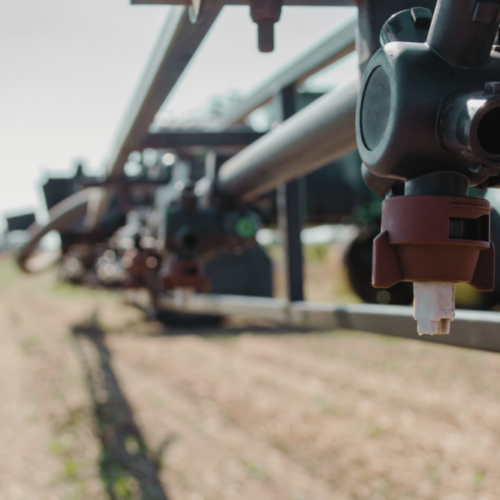
Lambda Cyhalothrin (Matador®, Silencer®, etc.) Update
In 2023, the Pest Management Regulatory Agency (PMRA) ruled that lambda cyhalothrin (trade names include Matador®, Silencer®, etc.) uses must be restricted. PMRA is the division of Health Canada responsible for reviewing safety data for pesticides.
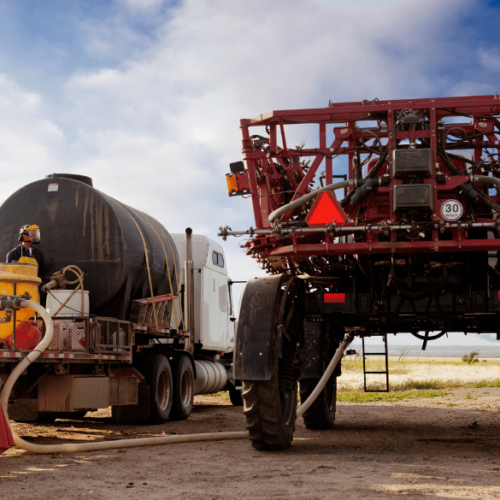
Insecticide Options and Pest Management Strategies for 2024
Welcome to our comprehensive quick reference guide for insecticide options and pest management strategies. In this document, we provide a concise overview of key insecticide options, and threshold guidelines to optimize crop protection and enhance yields. Read more…
Breeding Better DON-Resistant Barley: Inside Five Years of CDC Research
Five years of CDC research just delivered new DON-resistant barley varieties and a faster genomic breeding pipeline. Here’s what it means for your variety picks.

Managing Protein in Malt Barley: Beyond Nitrogen Rates
Why did the highest-yielding malt barley crop on record still get rejected for protein? Practical strategies to hit malt spec and avoid downgrades.

S3.E4 – Inside PRCOB: The Prairie Recommending Committee for Oat & Barley
In S3E4 of The BarleyBin, Mitchell Japp talks with SaskBarley director Chad Ferguson about PRCOB, the Prairie Recommending Committee for Oat and Barley, and it’s role in new variety registration in Western Canada.

Choosing a Fertilizer Rate When Fertilizer Costs Too Much
High fertilizer prices can shrink margins. Learn how to set profitable fertilizer rates using soil tests, 4R nutrient stewardship, nutrient removal estimates, split applications, and variable-rate strategies—without sacrificing yield.
Fall-Applied Herbicides for Resistant Wild Oats
Fall-applied granular herbicides (Groups 3 & 8) offer consistent wild oat control and resistance management. Learn why fall is the best time to apply.
Malt Barley Seeding and Production Recommendations
Four malt barley agronomy and marketing experts provide malt barley seeding and production recommendations and discuss the agronomic and economic benefits of growing barley.
Understanding Herbicide Resistance Tests
Learn how to interpret your herbicide resistance tests so they can help combat wild oat resistance effectively.
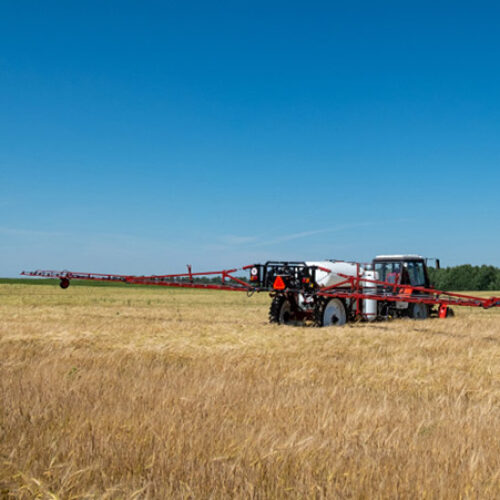
Feed Barley: Pre-Harvest Glyphosate Staging for Weed Control
Do not apply pre-harvest glyphosate to your cereal crops when the grain moisture is above 30%. This could leave unacceptable residue levels and impact the marketability of your grain. Use the thumbnail test to determine whether your grain is at the appropriate stage of maturity.
Barley Production Resources
From managing FHB and understanding chit, to battling herbicide-resistant weeds and optimizing your natural air drying (NAD) systems, SaskBarley provides resources to make it easier for you to grow quality barley year-after-year.
Search the categories below:
Fluopyram Now Available for Barley in Canada
Fluopyram, sold as Prosaro Pro, is now a viable option for Canadian barley farmers after key export markets adjusted their maximum residue limits (MRLs). Learn more…
How to Identify Barley Leaf Diseases: A Field Guide
Learn to tell scald, net blotch, spot blotch, and bacterial leaf streak apart in the field — and why correct ID drives smarter spray decisions.
S3.E7 – Hidden Threats: How to Identify Barley Leaf Diseases in the Field
Learn how to identify barley leaf diseases in the field, including scald, net blotch, spot blotch, and bacterial leaf streak. Practical agronomic insights for barley growers and agronomists from The BarleyBin Podcast.
Harvest Sample Program Deadline and Drop-Off Options in Saskatchewan
The Canadian Grain Commission’s Harvest Sample Program is still accepting submissions. The deadline is December 31.
Swathing vs. Straight Combining Barley
Discover the pros and cons of swathing vs. straight combining barley to produce marketable malting barley. Learn why desiccants like pre-harvest glyphosates are not allowed and how timing, quality management, and equipment availability play a role in your harvest decision.
Know Your Malt Barley Specs: What Maltsters are Looking For
Brewing a premium malt barley crop starts with understanding end-user specs. Here’s what maltsters are looking for when selecting for malt.
Insecticide Options for 2025
Explore this quick reference guide to insecticide options for 2025 tailored to Saskatchewan farmers. Get threshold guidelines, crop-specific recommendations, and IPM strategies to protect your yield.
The Trouble with Thrips: How to Identify and Manage This Cereal Pest
Dr. James Tansey of the Saskatchewan Ministry of Agriculture outlines all you need to know about scouting and calculating the economic damage caused by thrips in barley.
Lambda Cyhalothrin (Matador®, Silencer®, etc.) Update
In 2023, the Pest Management Regulatory Agency (PMRA) ruled that lambda cyhalothrin (trade names include Matador®, Silencer®, etc.) uses must be restricted. PMRA is the division of Health Canada responsible for reviewing safety data for pesticides.
Breeding Better DON-Resistant Barley: Inside Five Years of CDC Research
Five years of CDC research just delivered new DON-resistant barley varieties and a faster genomic breeding pipeline. Here’s what it means for your variety picks.
Managing Protein in Malt Barley: Beyond Nitrogen Rates
Why did the highest-yielding malt barley crop on record still get rejected for protein? Practical strategies to hit malt spec and avoid downgrades.
S3.E4 – Inside PRCOB: The Prairie Recommending Committee for Oat & Barley
In S3E4 of The BarleyBin, Mitchell Japp talks with SaskBarley director Chad Ferguson about PRCOB, the Prairie Recommending Committee for Oat and Barley, and it’s role in new variety registration in Western Canada.
Fall-Applied Herbicides for Resistant Wild Oats
Fall-applied granular herbicides (Groups 3 & 8) offer consistent wild oat control and resistance management. Learn why fall is the best time to apply.
Malt Barley Seeding and Production Recommendations
Four malt barley agronomy and marketing experts provide malt barley seeding and production recommendations and discuss the agronomic and economic benefits of growing barley.
Understanding Herbicide Resistance Tests
Learn how to interpret your herbicide resistance tests so they can help combat wild oat resistance effectively.