Potassium on the Brink?
Estimated reading time: 7 minutes
By Mitchell Japp, Director of Research & Extension for SaskBarley
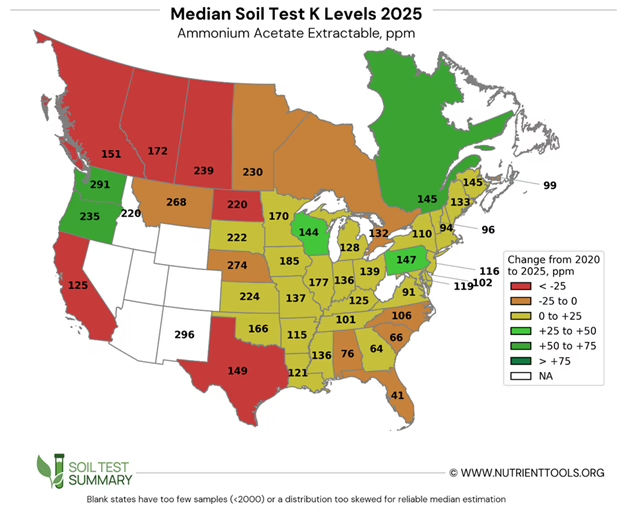
Saskatchewan’s median soil test potassium dropped by more than 25 ppm in The Fertilizer Institute’s latest Soil Test Summary, based on over 10 million soil tests. Even so, Saskatchewan soils still have among the highest soil test K levels and generally remain above critical levels, and the drop may partly reflect an unusually high 2020 result. Here’s how K can impact your barley crop.
Key Takeaways
- The Fertilizer Institute’s latest Soil Test Summary, drawn from over 10 million soil tests across North America, shows Saskatchewan with a median soil test potassium (K) drop of more than 25 ppm.
- Saskatchewan soils still rank among the highest for soil test K and generally remain above critical levels, but those reserves aren’t guaranteed long term without good management.
- The decline may partly reflect an unusually high 2020 result, so it’s worth watching over time rather than reacting to one survey.
- Most of the K a barley crop takes up stays in the straw, so baling and removing straw speeds K losses.
- Barley can respond to potash even when soil test K is sufficient; SaskBarley and Sask Wheat are funding research into why.
Do you have enough potassium in your fertility package? The Fertilizer Institute recently released its Soil Test Summary, available on their Soil Test Dashboard. It has made some headlines in the Ag news. It is worth taking notice of the trend, but we need a closer look at the data. We hear about nitrogen most often, then phosphorus, but less so about potassium. And potassium is where the trends show a significant drop in soil test levels.
What did the latest Soil Test Summary find?
The survey has some weight behind it. They’ve gathered data from over 10 million soil tests across North America and identified trends. Saskatchewan jumps out as having a severe drop in soil test potassium, with a median decrease of over 25 parts per million.
Is Saskatchewan soil potassium still sufficient?
Despite that decrease, Saskatchewan still has among the highest levels of soil test K, and soils generally remain above critical levels. The Saskatchewan soils that we have generally understood to have high background soil K, still does. But, this trend suggests that those background levels are not secure in the long term if they are not managed properly.
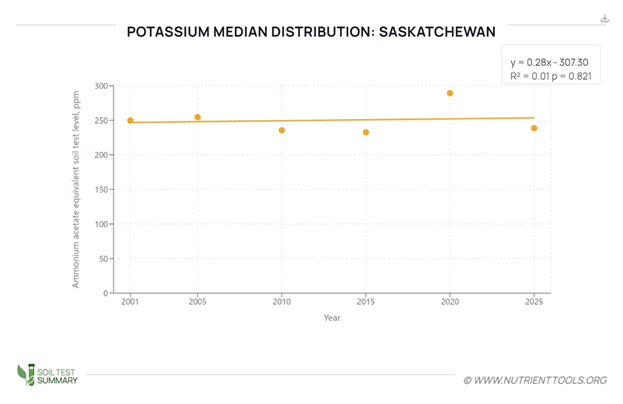
Digging in a little further, it appears that the trend is not a steady one over time. The last summary in 2020 showed a substantial increase in soil test K, above the baseline established from previous years. The most recent results are more in line with previous years. It may be an anomaly, but one worth watching over time, and on individual farms.
How can you track potassium on your own farm?
Each farm can monitor their own baseline fertility with soil test data over time. Generating a trendline will give you a good idea of fertility trends over time. Monitoring a nutrient like K that is relatively abundant in the soil, and has limited mobility in the soil can guide fertility application decisions.
Learn why soil testing is important.
Why does potassium matter for barley?
Potassium is important in barley production. It has a role in cell wall strengthening, which may improve standability compared with insufficient K. It also improves water utilization through transpiration controls, activates enzymes, drives production, movement and storage of sugars and starches, and reduced susceptibility to some diseases. Most K that is required by barley remains in the straw. Straw removal will enhance K losses from the soil.
Does barley respond to potash when soil K is sufficient?
Some research has indicated that barley will respond to the addition of potash in 2 out of 5 observations, even when soil test K is sufficient. SaskBarley and Sask Wheat are currently funding research at Irrigation Saskatchewan to better understand why these responses occur, including if the response is driven by potassium or chloride (the other nutrient in potash).
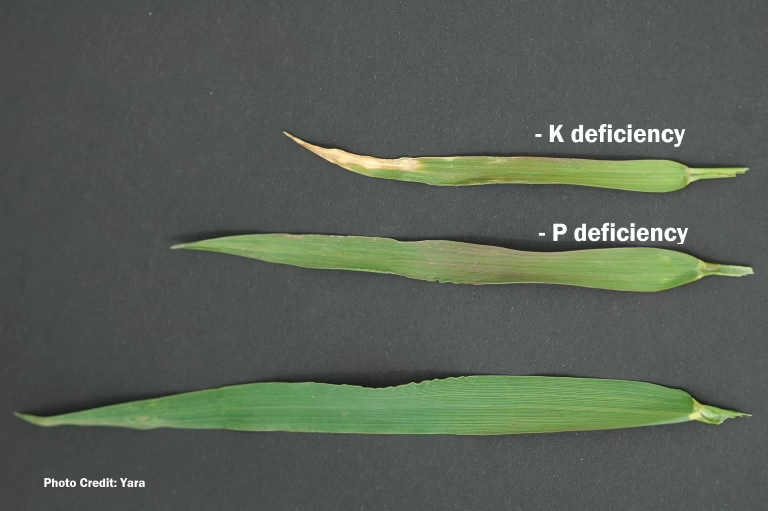
For more on the symptoms and causes of P and K deficiency in cereals, visit Yara.co.uk.
The bottom line
The Soil Test Summary results sound shocking for K in Saskatchewan. Digging a little deeper shows that while K should not be overlooked, Saskatchewan soils generally retain decent reserves of available K. Crops may still respond well to additional K, because it is valuable in seedling development, and applied K is readily available. The most important message is to monitor trends on your farm, and watch for deficiencies in those trends and in your fields.
Additional Resources:
- https://www.saskatchewan.ca/business/agriculture-natural-resources-and-industry/agribusiness-farmers-and-ranchers/crops-and-irrigation/soils-fertility-and-nutrients/potassium-fertilization-in-crop-production
- https://www.yaracanada.ca/crop-nutrition/barley/nutrient-deficiencies/potassium-deficiency-barley
- https://sts.nutrienttools.org
Related Reading
- When to Seed Barley
- Top Reasons to Soil Test
- BarleyBin Field Lab 2025 Research Results: Barley Seeding Rate, Fertility and PGR Trial Findings
Frequently Asked Questions
Is soil potassium declining in Saskatchewan?
The latest Soil Test Summary from The Fertilizer Institute, based on over 10 million soil tests, shows a median drop of more than 25 ppm in Saskatchewan soil test potassium. However, the province still has among the highest soil test K levels, and the drop may partly reflect an unusually high result in the previous 2020 summary.
Do Saskatchewan barley fields need potash?
Most Saskatchewan soils remain above critical potassium levels. Even so, research has shown barley responding to added potash in 2 out of 5 observations when soil test K was sufficient. Applied K is readily available and valuable in seedling development, so it can still pay to consider it, especially where soil test trends are falling.
Why is potassium important for barley?
Potassium helps strengthen cell walls, which may improve standability. It also helps the plant use water efficiently, activates enzymes, drives the production, movement and storage of sugars and starches, and can reduce susceptibility to some diseases.
Does removing barley straw affect soil potassium?
Yes. Most of the potassium a barley crop takes up stays in the straw rather than the grain. When straw is baled and removed from the field, that potassium leaves with it, which speeds up potassium losses from the soil over time.
How can I monitor potassium on my farm?
Track soil test results for each field over time and build a trendline. Because potassium is relatively abundant and has limited mobility in the soil, a farm-level trend is a better guide for fertility decisions than a single provincial survey. Watch for declines in those trends and for deficiency symptoms in your fields.

About the Author
Mitchell Japp, MSc, PAg is the Director of Research & Extension for the Saskatchewan Barley Development Commission (SaskBarley). SaskBarley is a producer-led organization that invests barley check-off dollars in research, market development and extension on behalf of Saskatchewan barley farmers. BarleyBin.ca is SaskBarley’s home for practical barley agronomy and marketing information.