Building for the Future: Rethinking Public Barley Breeding in Canada
Estimated reading time: 11 minutes
By Delaney Seiferling | Freelance Writer
Every Saskatchewan barley variety in your bin today started as a cross in a public breeding program 10 to 15 years ago. This Fall 2026 BarleyBin Magazine cover story looks at public barley breeding in Canada and why federal support for that system is eroding, what it means for the varieties farmers will need next, and how producer-led organizations are stepping in to build a new model.
Key takeaways
- A 2021 study found every $1 invested in barley breeding (1995–2020) generated about $26 in farmer benefits.
- AAFC’s core breeding budget has stayed largely flat while inflation erodes it — roughly 35% of a fixed budget’s value is lost over a 15-year variety development cycle.
- Research site closures at Scott, Indian Head and Lacombe have left gaps in regional variety testing and disease nurseries.
- Provincial barley organizations have committed over $7 million to keep core breeding programs running until 2028.
- In September 2026, the Canadian Barley Research Coalition (CBRC) and the Canadian Wheat Research Coalition (CWRC) formalized a partnership to build a new breeding model with AAFC and industry. Western Grains Research Foundation (WGRF) has since joined the partnership.
Why are better varieties so important to farm profitability?
There are many factors that can affect a farm’s profitability, but barley farmer Scott Jespersen says the biggest one on his farm is something that’s often overlooked: better varieties.
“Most farmers can grow a good crop – they know how to fertilize, how to use technology. But the big gains come in variety development,” says Jespersen, who farms near Spruce Grove, AB.
“In my opinion, it’s the number one thing that’s going to contribute to profitability on our farm.”
Recent research backs up Jespersen’s assessment.
A 2021 study concluded that, from 1995 to 2020, every $1 invested in barley breeding generated about $26 in farmer benefits – an estimated $1.36 billion in gains from $51.5 million invested.
But despite these strong, proven returns, the future of public crop breeding programs in AAFC is unclear. Federal support for these programs has been quietly eroding for years, with farmer groups filling in the gaps. More concerning is that there are currently no plans in place to ensure these breeding programs can continue to operate long term.
Compounding the problem is that most barley farmers aren’t aware of just how big of an issue this is, says Jespersen, who is also the Chair of Alberta Grains and the Canadian Barley Research Coalition (CBRC).
To date, farmers have regularly had access to new and improved barley varieties, without having to consider the complex and expensive breeding system behind them, he says.
“As a producer, we’re so focused on our own operation, we don’t see the macro part of what’s happening behind the scenes in the industry, and farmers are just not engaged.”
But Jespersen says if a new solution isn’t found quickly, the breeding pipeline just might run out, leaving farmers without one of the most important – if not the most important – tools in the toolbox.
“It’s like a garden hose. The water’s running, but you turn the tap off … in 10 years from now, there aren’t going to be any new varieties.”
How did we get here?
Federally funded breeding programs in AAFC were first established in the late 19th century, and for more than 100 years after that the Canadian government provided the scientists, infrastructure and long-term funding to develop crops suited to Canadian growing conditions.
Beginning in the 1990s, farm groups also started contributing to public breeding programs through farmer levies. But while this support was initially intended to supplement and leverage public investment, it increasingly became more important as federal support declined.
In recent decades, diminishing support also translated into downsizing of staff and infrastructure, resulting in the closure of key research sites at Scott and Indian Head, in Saskatchewan, and Lacombe, in Alberta.
Update: On July 16, federal and provincial agriculture ministers met in Halifax and signed a Memorandum of Understanding (MOU) committing to explore ways to keep the Indian Head and Scott Research Farms operating. Read more.
These losses are as equally concerning as the decline in funds, says Jill McDonald, Executive Director for SaskBarley.
“Breeders have to access regional variety testing and disease nurseries. We need to know that one variety can be adapted across Alberta and Saskatchewan, and hopefully parts of Manitoba. We cannot have varieties that are only specific to small regions within Western Canada because our export system can only handle having maybe two to three dominant [malt] barley varieties.”
How are farmer groups stepping up?
In light of all these concerns, farmer groups have increasingly stepped up their support. In 2020, SaskBarley, Alberta Grains and Manitoba Crop Alliance created the Canadian Barley Research Coalition (CBRC) to coordinate farmer investments in core barley breeding activities.
In more recent years, provincial barley organizations committed over $7 million to core barley breeding programs at Agriculture and Agri-Food Canada (AAFC) and the University of Saskatchewan’s Crop Development Centre to ensure programs can continue running until 2028.
And in early September, 2026, the CBRC announced it had joined with its wheat-industry counterpart group to formally work with AAFC and industry to create a new vision for Canada’s wheat and barley breeding system. In November, 2026, the Western Grains Research Foundation (WGRF) joined the strategic partnership, adding another farmer-funded, farmer-directed research organization to the table.

The industry needs to find a long-term solution, says McDonald, including a new model for how the plant breeding system is delivered and funded. Even with action now, some of the infrastructure lost to date cannot be fully restored – a situation that many feel could have been avoided had industry been given more clear communications around the future of public breeding programs.
“There are now significant gaps in the barley breeding system due to the site closures. We don’t even know yet where some of the work is actually going to happen in the future.”
Why is federal support declining?

The funding model behind public barley breeding has become mathematically unsustainable, says Francois Eudes, Director of Research, Development and Technology of the Science and Technology Branch at AAFC.
This is because AAFC’s core funding envelope has remained largely flat while inflation steadily erodes its purchasing power, he says. Even at just 2 per cent inflation per year, the value of a fixed budget falls by roughly 35 per cent over 15 years – about the maximum timeline that’s required to develop a new barley variety, from initial crosses to release.
“The current model is going to break,” he says.
He says these pressures are not only specific to barley, now extending across more than 30 crop species supported by AAFC and virtually every science program within the department.
Furthermore, he says that simply adding more farmer money into the existing federal structure will not solve its deeper structural problems, as the department doesn’t have the same flexibility or agility that a private company, or even a university organization would.
“What we do is quite expensive the way we do it,” he says. “We get to a point where relying so extensively on AAFC to do all the science and deliver this commercial product is not sustainable. That’s why we need collectively to create something new.”
Working towards a collective solution
All parties agree that the current system isn’t sustainable.
McDonald says one thing that has also become clear is that any future model would need to give farmers direct control over the direction and stability of Canada’s barley breeding programs.
She says partnership with AAFC will continue to be critical going forward, however, as any future model would also still rely on foundational public infrastructure, including germplasm, disease nurseries and regional testing – a point on which Eudes agrees. He says AAFC should continue to invest in foundational science, germplasm development and public-good research, while other groups take larger roles in advancing material toward commercial varieties.
Another thing that has become clear is that developing a new model will require continued leadership from farmers themselves, McDonald says – work that has already begun.
In fact, she says one of the silver linings to come out of this situation has been seeing SaskBarley and other Western Canadian provincial crop commissions proactively address these challenges.
“I’ve never seen anything like it. Everyone is working with a shared goal. It’s very much a collaborative effort amongst funding groups to address the erosion that we have seen within Ag Canada.”
Time is of the essence
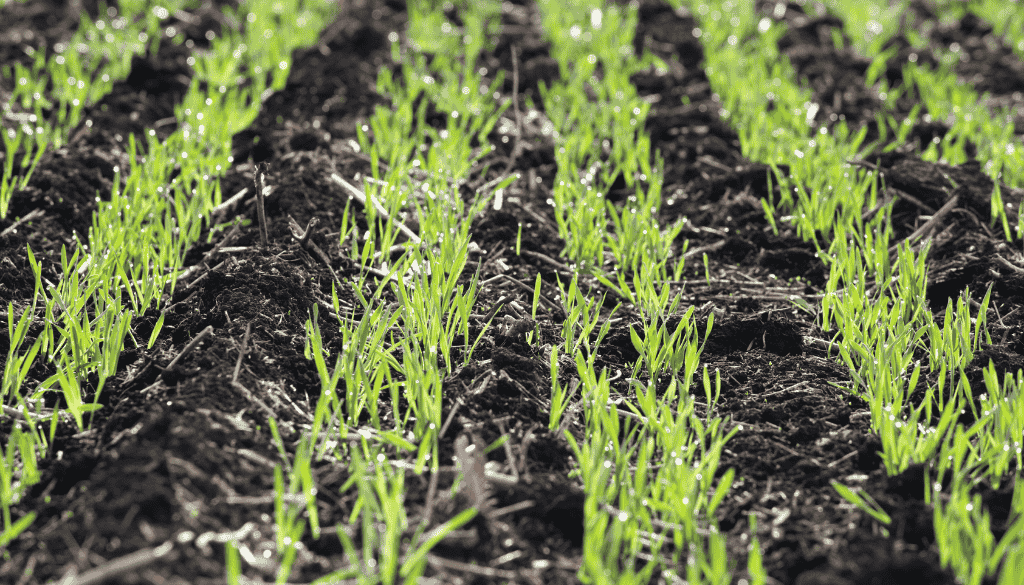
For Jespersen, the concern isn’t today’s varieties. It’s the varieties farmers will need ten years from now, designed to address not only current but emerging threats.
For example, this year his farm dealt with excessive moisture instead of drought.
“We need something instead of drought tolerance. We need something for really moist soils,” he says.
But breeders can’t respond to tomorrow’s production challenges if today’s breeding capacity disappears, he says – and farmers should be worried about this.
“There is more than just growing a crop that is affecting your bottom line. Variety development right now is top of mind for those of us that are working on this new vision.”
Eudes says one thing that everyone can agree on is that time is of the essence.
“For every year we take to find that financially sustainable solution, the more competitiveness we’re going to lose,” he says. “We need collectively to build that made-in-Canada solution now. We cannot waste more time.”
McDonald agrees, saying that this is a topic that all farmers should be aware of, and engaged on, right now.
“It just affects farmer profitability so much at the end of the day – and that creates a shared sense of urgency to develop a solution. We need a stable, sustainable system that continues to deliver varieties that work for farmers and meets the quality needs of our end-use customers.”
Learn more about the strategic partnership working to secure the future of wheat and barley breeding:
| CBRC and CWRC join forces to transform barley and wheat breeding On September 3, 2026, the Canadian Barley Research Coalition (CBRC) and the Canadian Wheat Research Coalition (CWRC) announced a formal strategic partnership aimed at reshaping wheat and barley breeding in Canada. “Through this new agreement, the CBRC and CWRC hope to ensure the Canadian system meets that standard for many years to come.” View the full release. |
| WGRF partnership bolsters wheat and barley breeding innovation efforts On November 24, 2026 the Western Grains Research Foundation (WGRF) joined the Canadian Barley Research Coalition (CBRC) and the Canadian Wheat Research Coalition (CWRC) in their strategic partnership to transform the Canadian wheat and barley breeding system. “It’s exciting to have another farmer-funded and farmer-directed research organization onboard who shares our vision and recognizes the importance of this work..” View the full release. |
Related reading on BarleyBin.ca
- How Canada’s Crop Breeding System Works for Farmers
- AAFC Staffing Cuts Threaten Barley Research and Long-Term Returns for Saskatchewan Farmers
- S3.E4 – Inside PRCOB: The Prairie Recommending Committee for Oat & Barley
- Breeding Better DON-Resistant Barley: Inside Five Years of CDC Research
Frequently asked questions
Why is public barley breeding funding in Canada declining?
According to AAFC’s Francois Eudes, the department’s core funding envelope has stayed largely flat while inflation erodes its purchasing power. At just over 2% inflation, a fixed budget loses roughly 35% of its value over 15 years — about the time it takes to develop a new barley variety. He says simply adding more farmer money to the existing federal structure won’t fix the deeper structural problem.
What is the return on investment for barley breeding?
A 2021 study found that from 1995 to 2020, every $1 invested in barley breeding generated about $26 in farmer benefits. That works out to an estimated $1.36 billion in gains from $51.5 million invested, which makes variety development one of the highest-return investments in the barley sector.
Which AAFC research sites have closed?
The cover story names the closure of key research sites at Scott and Indian Head in Saskatchewan and Lacombe in Alberta. In July 2026, federal and Saskatchewan agriculture ministers signed an MOU committing to explore ways to keep the Indian Head and Scott research farms operating.
What is the Canadian Barley Research Coalition (CBRC)?
The CBRC was created in 2020 by SaskBarley, Alberta Grains and Manitoba Crop Alliance to coordinate farmer investments in core barley breeding. On September 3, 2026, it announced a formal strategic partnership with the Canadian Wheat Research Coalition to work with AAFC and industry on a new vision for wheat and barley breeding.
What can barley farmers do about the future of variety development?
SaskBarley’s Jill McDonald says this is a topic all farmers should be aware of and engaged on right now, because it directly affects farm profitability. Producers’ levy dollars already fund core breeding programs through provincial commissions, and farmers are now leading the conversation on a long-term model for public breeding.
Originally published in the Fall 2026 issue of The BarleyBin Magazine (Vol. 11), pages 4–8.