From Protein to Pests: 12 Barley Research Projects Your Levy Dollars Are Funding
SaskBarley is investing more than $307,000 in 12 research projects currently underway. Each one tackles a question Saskatchewan barley growers are asking, from malt protein and nitrogen timing to herbicide-resistant weeds, Fusarium head blight, pre-harvest sprouting and feedlot barley processing. Here’s what each project is studying, who’s leading it, and when growers can expect results.
The question: Can split nitrogen work for malt barley?
The project: Continuing 4R Management: Can split applications be managed in malt barley to reduce risk and maintain yield and quality?
Principal Investigator: Brianne McInnes, Northeast Agriculture Research Foundation (NARF)
SaskBarley Commitment: $13,500
Projected End Date: 2027
Supported also by ADOPT and BMBRI, this project continues the research started in 2025 to evaluate the risks and benefits of split applications and enhanced efficiency fertilizer use in malt barley production. Neither of these practices have received much research focus in malt barley. Split applications have the potential to assist farmers with nitrogen management decisions, but malt growers are often wary of the practices due to the risk of increasing protein beyond malt specifications. Contrasting the 2025 growing season with 2026 will add insight into the practice, across several Agri-ARM locations.
The question: How do we stay ahead of resistant kochia and wild oats?
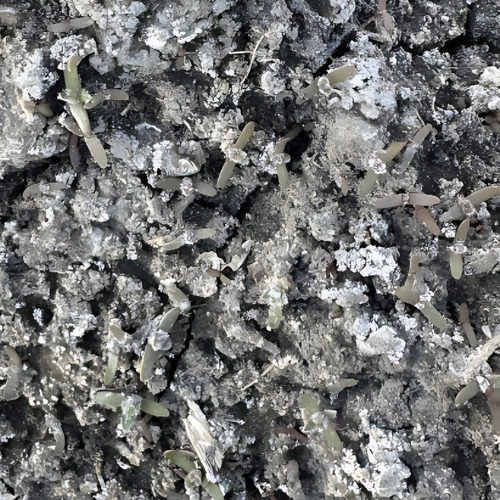
The project: A Long-term Management Plan for Herbicide-Resistant Kochia and Wild Oat
Principal Investigator: Shaun Sharpe, Agriculture & Agri-Food Canada, Saskatoon
SaskBarley Commitment: $21,721
Projected End Date: 2031
Dr. Sharpe led the development of a Strategic Research Initiative proposal to address herbicide resistant kochia and wild oats. The Strategic Research Initiative invites proposals to address very large problems in the industry, and is managed by the Saskatchewan Ministry of Agriculture, who are lead funders of this project, supported by several other organizations as well. This is a massive project designed to coordinate the efforts of weed scientists across the Prairies to make meaningful advancements to address the growing problem of herbicide resistant wild oats and kochia.
The question: Why was my malt protein so high?
The project: Beyond N Rate: Protein Management in Malting Barley
Principal Investigator: Lana Shaw, South East Research Farm (SERF)
SaskBarley Commitment: $40,200
Projected End Date: 2027
This new project arose out of questions from farmers in 2025. We built this project to help answer questions about protein development in barley. Farms across Saskatchewan experienced higher protein than expected, despite high yields and moderate nitrogen fertilizer application and background soil nitrate. While nitrogen is largest factor influencing protein, this project evaluates the contribution of nitrogen, sulphur, seeding date and soil testing. The project is co-funded with ADOPT and is grown at several of the Agri-ARM locations.
The question: Can better genetics and seed treatment stop Bacterial Leaf Streak?
The project: Harnessing Genetic Resistance and Cold Plasma for Sustainable Management of Bacterial Leaf Streak in Wheat and Barley
Principal Investigator: Randy Kutcher, Crop Development Centre, University of Saskatchewan
SaskBarley Commitment: $20,700
Projected End Date: 2029
Dr. Kutcher has been leading the research on bacterial leaf streak (BLS) in barley and wheat for Western Canada for the past six years. This project builds on the strategic approach that he has been developing for the past several years. BLS is a difficult disease because it is not clear how widespread it is, and there are currently no in-crop management options. Fungicides are ineffective because it is bacterial. Building genetic resistance to the disease is a beneficial approach for growers. This approach partners with cold plasma technology which is a tool that can potentially be utilized in seed – a key point for agronomic intervention in the disease life cycle. Several funders contribute to this project.
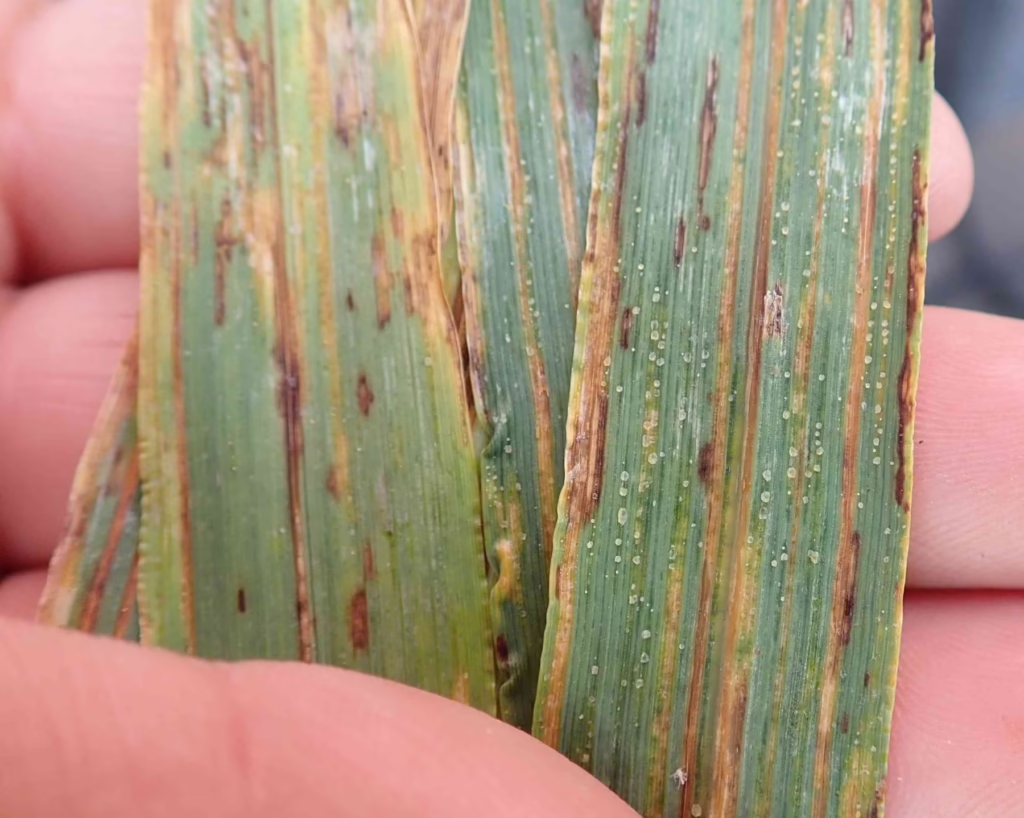
Learn more about BLS in our resource How to Identify Barley Leaf Diseases: A Field Guide at barleybin.ca.
Hear about Dr. Kutcher’s work in S3.E7 of the BarleyBin Podcast.
The question: How should barley be processed for today’s feedlot cattle?
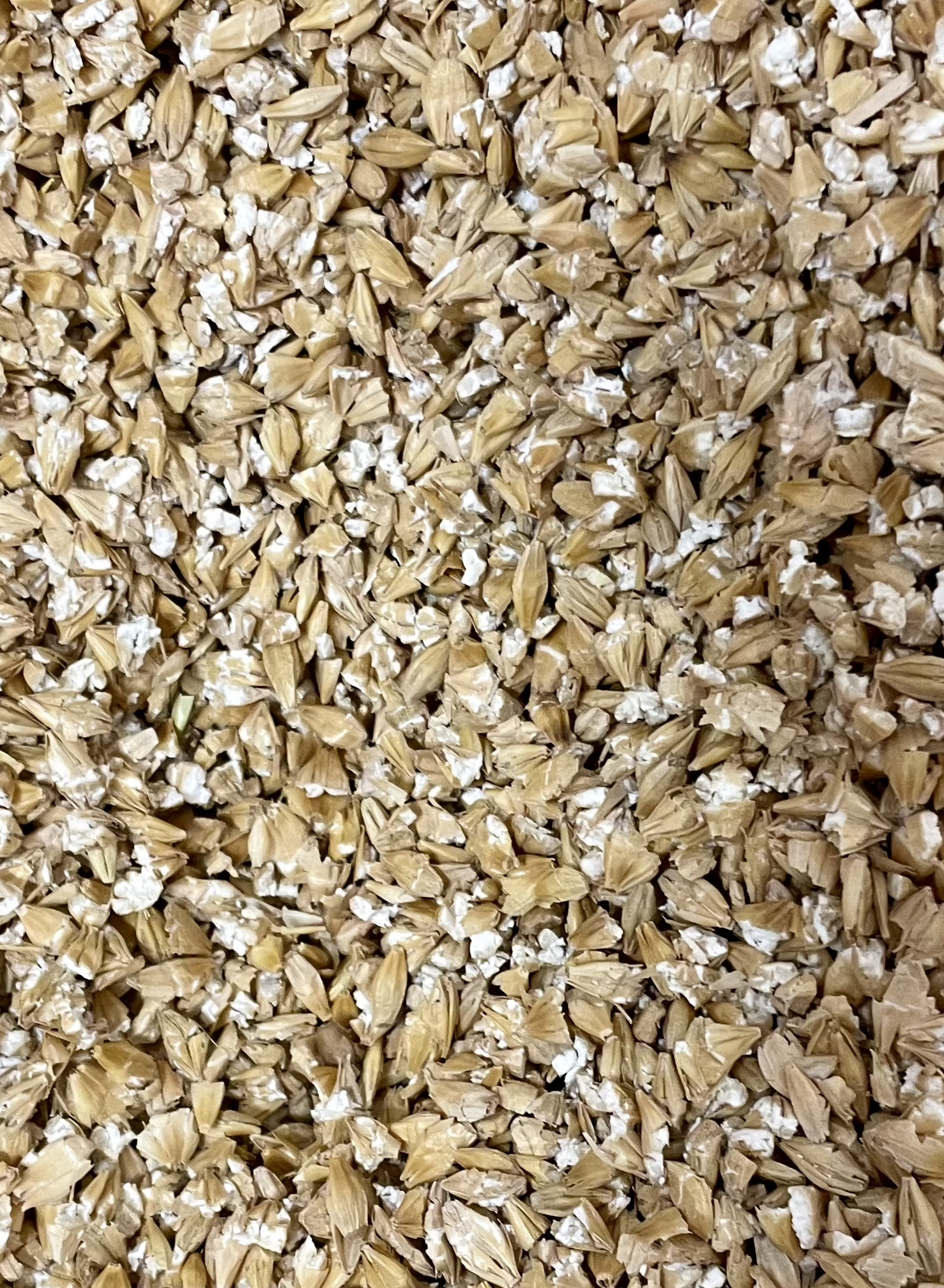
The project: Fine-tuning dry-rolled barley grain processing for finishing beef cattle
Principal Investigator: Greg Penner, University of Saskatchewan
SaskBarley Commitment: $79,928
Projected End Date: 2029
The recommendations for barley grain processing that have been used in the beef industry for a long time are based on limited research, on dairy cattle and the limits of the research ended up as the recommendations. Considering the importance of the beef industry to barley markets, and the incentive to ensure barley is well utilized in the cattle industry, this project will fine-tune the recommendations and ensure the recommendations moving forward are robust for modern beef cattle genetics.
RDAR and ADF are also funding this project.
Learn more about Dr. Penner’s work in Efficient Barley Processing: New Research Boosts Feedlot Profits.
The question: How do I know when my barley is at risk for Fusarium head blight?
The project: FHB Risk Maps – PrairieFHB.ca
Principal Investigator: Mario Tenuta, University of Manitoba
SaskBarley Commitment: $43,345
Projected End Date: 2028
The new Prairie wide risk maps are a useful tool developed under a series of projects led by Dr. Paul Bullock. This project furthers the development of those maps and ensures they evolve and improve over time, by validating the model across the prairies. Now led by Dr. Mario Tenuta, this project builds on the models developed previously and fine-tunes them as conditions evolve and more data is collected.
SaskBarley funds this project along with the other prairie wheat and barley crop commissions.

Navigating the New FHB Risk Mapping Tool
The question: Can variable rate nitrogen make malt protein more predictable?
The project: Optimizing Malt Barley Yield and Quality: Farm-Scale Comparison of Blanket vs. Variable Rate Nitrogen Strategies Across Landscape Positions
Principal Investigator: Lana Shaw, South East Research Farm (SERF)
SaskBarley Commitment: $30,000
Projected End Date: 2027
Building on the idea that led to the development of “Beyond N: Protein Management in Malt Barley”, this project is exploring whether spatial management of nitrogen fertilizer across the landscape can lead to more precise and predictable malt barley protein levels. While variable rate fertilization technology has been available for some time, the adoption has not been widespread. There have been some challenges in developing tools to appropriately manage fertility across the landscape, but they are much better than they used to be. This project will explore the application of those tools in malt barley protein management in south-east Saskatchewan.
The question: Can we breed barley that holds DON levels down?
The project: Exploration and exploitation of genetic variation associated with FHB resistance and low DON accumulation in two-row barley.
Principal Investigator: James Tucker, Agriculture & Agri-Food Canada, Brandon
SaskBarley Commitment: $23,375
Projected End Date: 2030
Deoxynivalenol (DON), also known as vomitoxin, is the most important factor in evaluating the impact of FHB on barley, but offers no visual symptoms. Genetic variation in resistance to FHB and low-level accumulation of DON are critical to advance impactful genetic improvements in FHB resistance. Dr. Tucker is a leading pathologist working on FHB in barley. Several groups are co-funding this project.
Learn more about SaskBarley funded research Breeding DON-Resistant Barley.
The question: Can anything protect malt barley from sprouting before harvest?
The project: Agronomic management of pre-harvest sprouting in modern malt barley cultivars
Principal Investigator: Balwinder Kumar, Lakeland College
SaskBarley Commitment: $15,700
Projected End Date: 2027
Pre-harvest sprouting (chitting) in malt barley is a challenging problem to tackle. Genetically, there is a goal to have low dormancy in malt barley so the malt is ready to go when it reaches the malt house. This creates problems in the field when fall weather turns damp. Agronomic management is mostly limited to seeding and harvest timing. This project is the initial exploration of whether a product could be applied to offer some protection from pre-harvest sprouting when conditions require that protection.
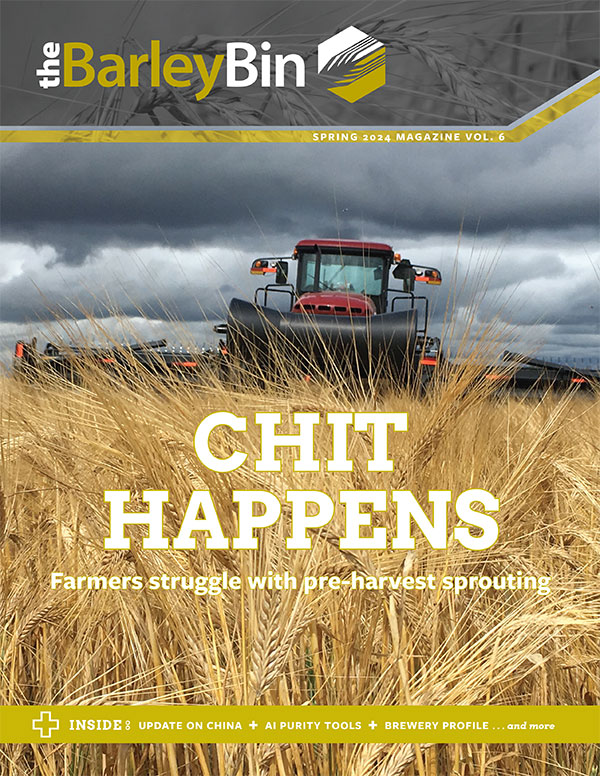
Learn more about chitting in the Spring 2024 edition of the BarleyBin Magazine.
Catch up on all past issues.
The question: Could enzymes break down DON in barley?
The project: Evolving enzymes for deoxynivalenol degradation in barley for improved resistance to Fusarium head blight
Principal Investigator: Kristen Van Gelder, Agriculture & Agri-Food Canda, Saskatoon
SaskBarley Commitment: $13,943
Projected End Date: 2027
This upstream research is investigating the possibility of enzymes to degrade deoxynivalenol (also known as DON or vomitoxin). This is a unique approach that offers some potential for progress in the battle against FHB. DON is impactful in malt barley marketing, so there is value in exploring tools that can reduce DON concentration.
Alberta Grains is jointly funding this project with SaskBarley.
The question: How does extreme heat affect malt barley quality?
The project: Under the heat: initial assessment of effect of high temperature on several quality traits in malting barley and its resistance to FHB
Principal Investigator: Ana Badea, Agriculture & Agri-Food Canada, Brandon
SaskBarley Commitment: $5,000
Projected End Date: 2027
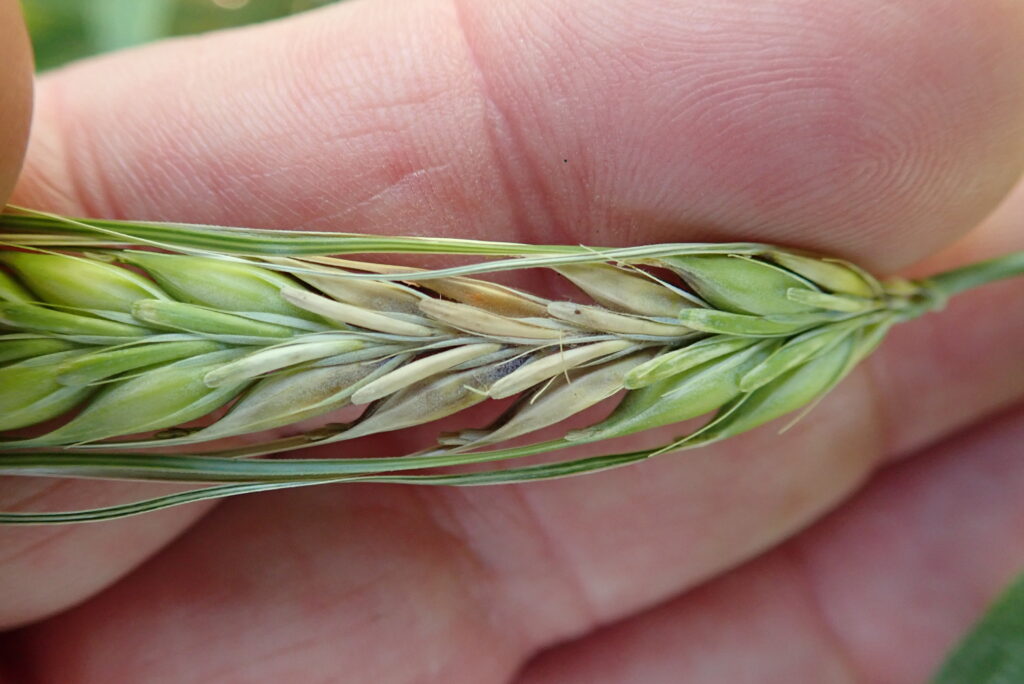
One of the challenges of malt barley production is to avoid high heat, especially during flowering. July often has several days above 30 degrees in the southern prairies. This project begins to explore how to measure the impact of heat on malt barley quality traits, how those traits link with FHB resistance and potential genetic solutions by starting to identify which genes are implicated in stress response. That is a lot of focal points for a short-term project, so definitive outcomes are not the goal here. This project will guide future investment and research where results appear most impactful.
Alberta Grains, RDAR and BMBRI are co-funding this project.
The question: Where are Saskatchewan crop yields falling short, and why?
The project: GAP Analysis
Principal Investigator: Jessica Agnew, Global Agricultural Productivity (GAP) Initiative, Virginia Tech
Projected End Date: 2027
There is always a gap between realized yields on the farm and the potential yield that the genetics are capable of. These gaps are influenced by outside factors, including weather and management. When considered at a provincial scale, soil capability is another factor to consider. This project, funded through SaskCrops, will identify where gaps are largest and what is the driving factor in those gaps. As a result, this project will identify where extension resources and research investment can help to fill those gaps and increase the realized yield gains on farms.
Conclusion
Most of these projects will wrap up between 2027 and 2031, and SaskBarley will share results on BarleyBin.ca as they come in. Every project on this list started with a question from the field. If there’s a production challenge on your farm you’d like to see researched, reach out to SaskBarley, and subscribe to the SaskBarley e-newsletter to follow these projects as they progress.