
Barley Market Report: Tighter Global Supplies Set to Support Canadian Barley Prices in 2026/27
This barley market report was provided by Leftfield Commodity Research.
Estimated reading time: 5 minutes
Key Takeaways
- Canadian barley prices in 2026/27 will be influenced by lower exports, which are expected to fall by at least 1.0 mln tonnes in 2026/27, driven by smaller production rather than weaker demand.
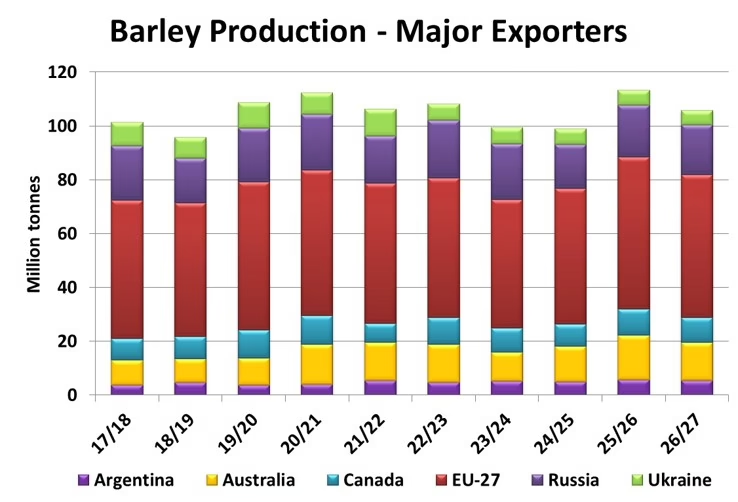
- USDA projects barley production will decline in every major exporting country, with the EU and Australia seeing the steepest drops.
- Black Sea export uncertainty continues to tighten global availability, since Russia and Ukraine account for roughly 20% of world barley trade.
- China remains the top barley importer, with early estimates pointing to another 10.7 mln tonne import year.
- A tighter 2026/27 balance sheet points to strengthening prices after the seasonal harvest low, with Canadian barley likely trading at a narrower discount.
Canadian barley export outlook for 2026/27
One important piece of the outlook for Canadian barley prices in 2026/27 is export demand. While the final total has yet to be tallied, the 2025/26 marketing year could end up with record exports of around 3.8 mln tonnes. It’s quite likely Canadian barley production will be smaller this year despite higher seeded area, as yields won’t match the all-time high from last summer. This will force export volumes to be at least 1.0 mln tonnes lower next season. The smaller shipments won’t be due to a lack of interest in Canadian barley, but rather because supply won’t allow for a larger export program while still maintaining a minimum carryout. How hard the market needs to work to ration exports will be a key part of upside price potential, and something that will be shaped by global factors.
Global barley production set to decline
USDA recently estimated barley production would be lower in every major exporting country in 2026/27. Total production across the key exporters of around 105 mln tonnes would still be near the 5-year average, but well below last year’s high of 113 mln tonnes. The biggest drop is expected in the EU, which may be down 6% to 53.2 mln tonnes. In addition, extreme heat is severely impacting EU corn yields, which may see barley feeding increase, further reducing their exportable surplus. Australia is also projected to see a sizeable drop to a 14.1 mln tonnes, down 15% from last year’s record, and with potential for an even bigger decline depending on the effects of El Nino.
Black Sea uncertainty adds to supply risk
In addition to smaller supplies, uncertainty around export movement out of the Black Sea region further tightens barley availability for importers. One can’t predict how the war will unfold going forward, or if the targeting of grain export facilities and commercial vessels will deescalate or intensity further. Russia and Ukraine together account for approximately 20% of world barley trade, depending on the year, so disrupted movement from those countries is significant. All of this means Canada will be forced to export less barley in an environment where there is reduced availability from other key suppliers.
Import demand: China, Japan, and the Middle East
Potential importer buying interest also plays a role. China is the largest global barley export destination, representing approximately one-third of world trade the past couple of seasons. It’s always difficult to predict what China will do, but initial estimates point to another year of big barley imports of 10.7 mln tonnes. Reports of stress to their domestic corn crop has the potential to boost barley demand further. Shipments to other key importers such as Japan and the Middle East are expected to be relatively steady. At the same time, Iran has been the world’s third largest barley importer the past two seasons, and it’s uncertain what their buying will look like given the current conflict. The North African countries are also notable importers, and their own large grain harvests this year may see lower barley purchases.
What tighter supplies mean for Canadian barley prices in 2026/27
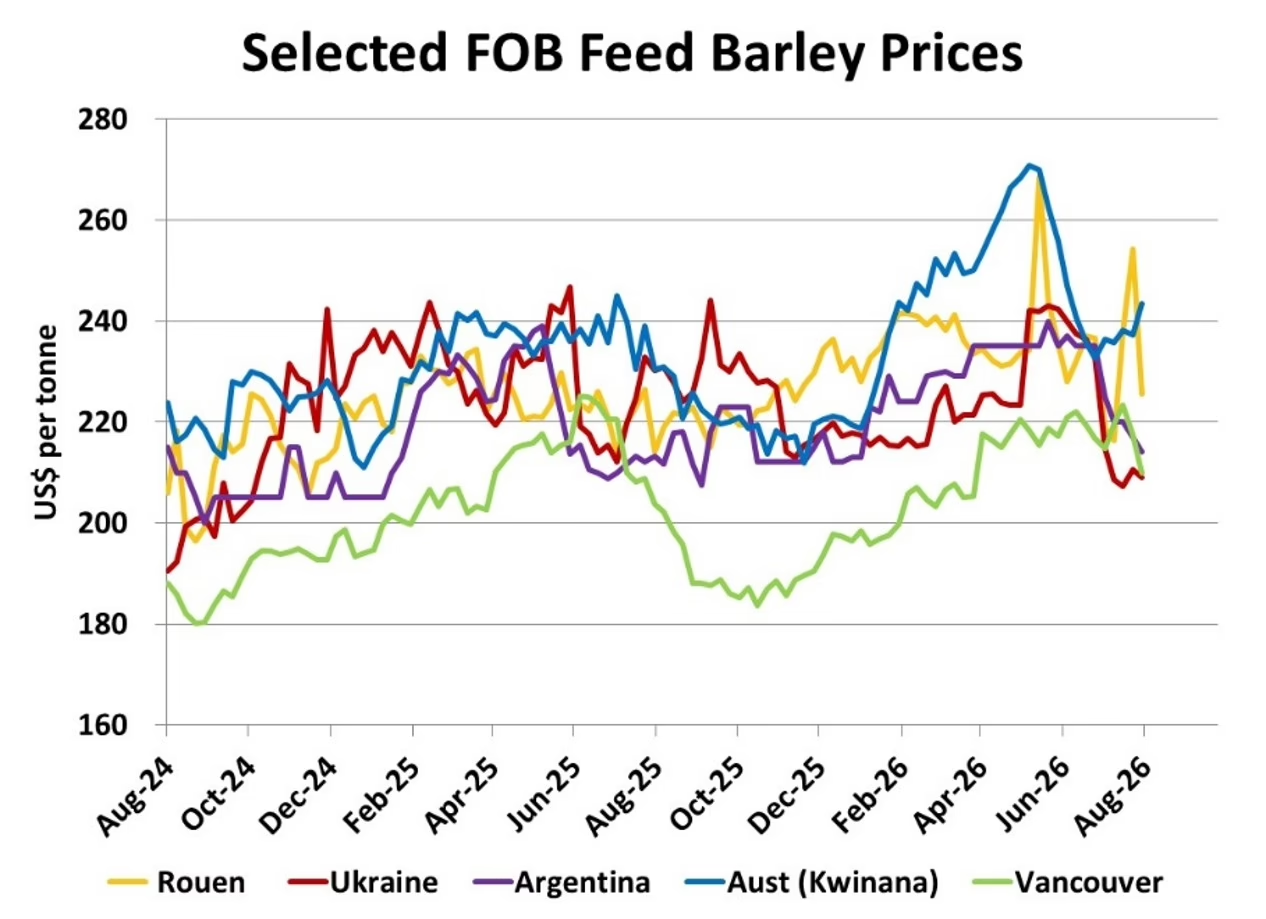
World barley prices have softened over the past few weeks at most major locations. This is not surprising as values often weaken going into harvest. The global barley market will be tighter in 2026/27, and export movement from Canada must be rationed due to smaller supplies, which suggests prices will likely strengthen after putting in their typical harvest low. Also, a tighter domestic and global barley balance sheet may also point to Canadian barley trading at a narrower discount to other exporters going forward than was seen through much of 2025/26.
Frequently Asked Questions
USDA expects barley production to fall in every major exporting country, including Canada, the EU, and Australia, even though total production among key exporters remains near the five-year average.
Export volumes are expected to be at least 1.0 mln tonnes lower than the record ~3.8 mln tonnes shipped in 2025/26, driven by smaller production rather than weaker demand.
Russia and Ukraine together account for approximately 20% of world barley trade, so continued uncertainty over export movement and the targeting of grain facilities and vessels keeps global availability tight.
China is the largest global barley export destination, representing about one-third of world trade, with early estimates pointing to 10.7 mln tonnes of imports in 2026/27. Japan, the Middle East, and North Africa are other key destinations.
With global supplies tightening and Canadian exports being rationed, Canadian barley prices in 2026/27 are expected to strengthen after their typical harvest-season low, and Canadian barley may trade at a narrower discount to other exporters than it did through much of 2025/26.