Managing Protein in Malt Barley: Beyond Nitrogen Rates
Estimated reading time: 5 minutes
Practical strategies to hit malt specs and reduce risk at harvest.
By Mitchell Japp, Research & Extension Manager, SaskBarely
Key Takeaways
- Protein concentration is crucial for malt barley and influences starch to sugar conversion in brewing.
- Factors like nitrogen fertility, environment, seeding date, variety, and sulphur affect malt barley protein levels.
- High yields do not always mean lower protein; environmental conditions can lead to unexpected protein concentrations.
- Producers faced protein excess in 2025 despite high yields, highlighting the complexity of malt barley production.
- To manage malt barley protein effectively, consider all influencing factors and adjust practices accordingly.
Why Protein Matters and What Influences It
Protein concentration is a critical specification for malt barley buyers. In the malting and brewing process, the enzymes within the protein are used to facilitate the transition of starch to sugars that are then fermented. Barley enzymes can be used in adjunct brewing to utilize other sources of starch, such as corn or rice (adjuncts). Protein is required for these processes to work, but excess protein reduces the extract yield of the barley, leading to tight specifications for purchasing malt barley. Typical targets are between 10% and 12.5%, while some export markets will accept up to 13% protein. All-malt brewing, adjunct brewing and distilling end-uses have different targets within that range.
Read more: Know Your Malt Barley Specs
Nitrogen fertility
Nitrogen fertility, whether from soil reserves, mineralization or applied fertilizer, is the first thing we think of when it comes to protein. Certainly, it is the most managed contributing factor in grain protein, and protein concentration directly reflects nitrogen content in the grain. However, grain protein is influenced by more than just nitrogen fertility.
Environment
Environment can be a factor in protein development, including precipitation amounts, timing and temperature during key stages of crop development. These differences could affect agronomic factors like nitrogen uptake, or lead to variation in different yield components (number of heads, kernels per head and kernel size). If yield is driven more by heads and kernels than kernel size, starch dilution would be less than anticipated for a high yielding crop. For dryland agriculture in Saskatchewan, there are no direct management options to control the environment, so our best management of it is to target crop development around expected environmental conditions.
Seeding date
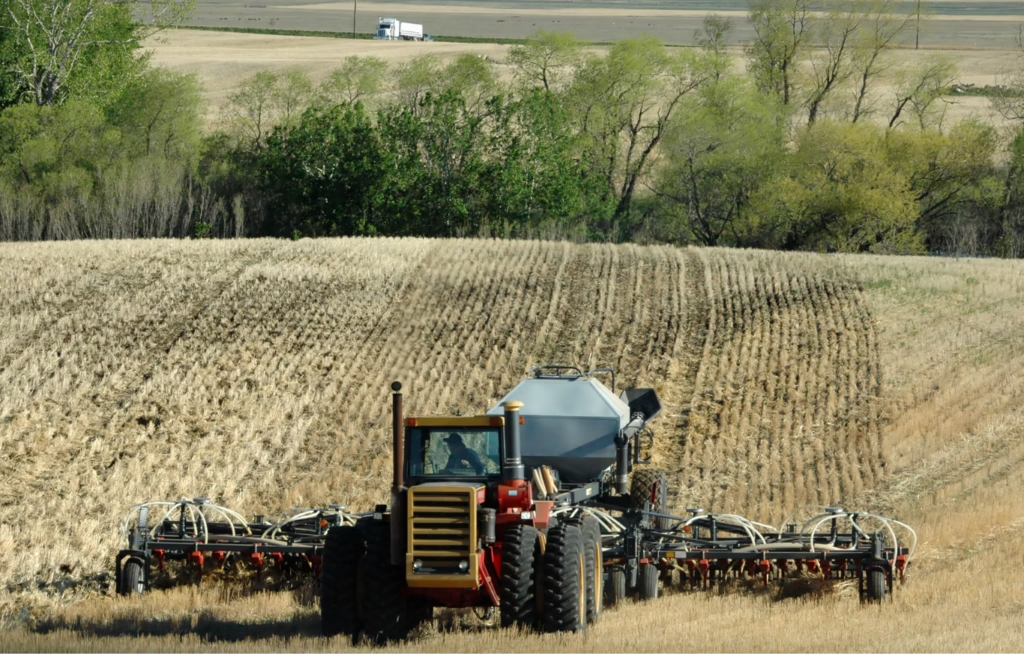
Seeding date has been associated with higher protein concentration in barley, independent of yield reductions. Reduced yield also reduces the starch in the grain, and the protein concentration increases. Research on barley seeding dates suggests that delayed seeding in the northern prairies does not consistently cause reduced yields – compared to early seeding. And, at the same time, barley protein increased with later seeding dates. This may relate to the additional growing degree days at key crop developmental stages, or overall accumulation during growth.
Read more: When to Seed Barley
Variety
Variety also plays an important role in determining grain protein, even when crops are grown under the same environmental and fertility conditions. The Canadian Malting Barley Technical Centre generally reports that newer varieties like CDC Fraser, AAC Connect and CDC Churchill, and even AAC Synergy, tend to produce lower grain protein while supporting higher yield potential compared to former industry standards such as AC Metcalfe and CDC Copeland. These genetic improvements make variety selection a practical and cost‑effective tool for managing malt barley protein, particularly in less predictable seasons.
Read more: CMBTC Recommended List
Sulphur
Sulphur can also influence grain protein, despite barley removing relatively small amounts in the grain. Adequate sulphur supports yield and starch accumulation, helping dilute protein, while insufficient sulphur can limit yield and result in elevated protein even at unchanged nitrogen rates. High‑yielding barley requires approximately 20 lbs/ac of sulphur uptake, making balanced sulphur nutrition another important factor in managing protein risk.
2025 Examples: Even a Record Crop Can Get Rejected
Who would expect that in the highest yielding malt barley crop on record in Saskatchewan, anyone would get rejected for excess protein? Normally, high yielding cereal crops result in reduced protein because starch dilutes the protein. But, as you may know, malt barley crops can be full of surprises.
In many ways, the growing season in 2025 was challenging. Early spring was dry and there were plenty of hot days. Fortunately, for most of the province, the rains did come, and some spectacular barley crops were harvested. Unfortunately, some conversations with producers post harvest revealed barley crops that were rejected for malt due to their barley’s protein concentration exceeding malt specifications. In these discussions, producers were unclear why their protein was not within the target range of 10 – 12.5%.
Two Saskatchewan cases — a north-central CDC Churchill field at 85 bu/ac and 13.2–13.6% protein, and an east-central AAC Connect field running 13.2–13.4% — both exceeded malt spec despite fertility planning, illustrating how environment and variety interact with nitrogen.
Conclusion
Nitrogen is where we start looking for yield and protein, but it is not the only contributing factor. When nitrogen does not account for what is observed in the field, it is worthwhile to look beyond. Environment, variety, seeding date, sulphur, and nitrogen are all factors that have an influence on grain yield and protein. When a malt barley crop is downgraded due to excess protein, it is worth taking a close look and making some adjustments for the future.
Learn more about malt barley specifications, when to seed barley, and the top reasons to soil test or follow us on Facebook and X @SaskBarley for timely production tips.

This article was originally written for the Spring 2026 edition of the BarleyBin Magazine.