AI is Changing Malt Barley Purity Testing
By Mitchell Japp, Research & Extension Manager, SaskBarley
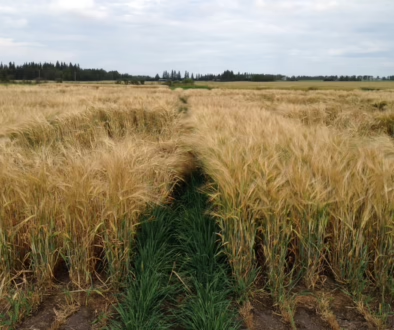
Malt barley growers know the drill: varietal purity matters. Most maltsters require a minimum of 95% varietal purity for accepted deliveries. In reality, this standard is rarely a problem. The malt industry typically works with just one or two dominant varieties at a time, and many farms stick with the same variety for several seasons. Some buyers even require certified seed every other year to help keep purity on track.
Where challenges arise is in testing.
Traditional DNA-based varietal purity testing is accurate — but it’s also slow and expensive. A single test can cost a few hundred dollars and take several days to return results. That means grain is often delivered before test results are known, leaving the door open to unexpected discounts in the rare event purity falls short.
SaskBarley saw an opportunity to improve that process.
Exploring AI-Powered Purity Testing
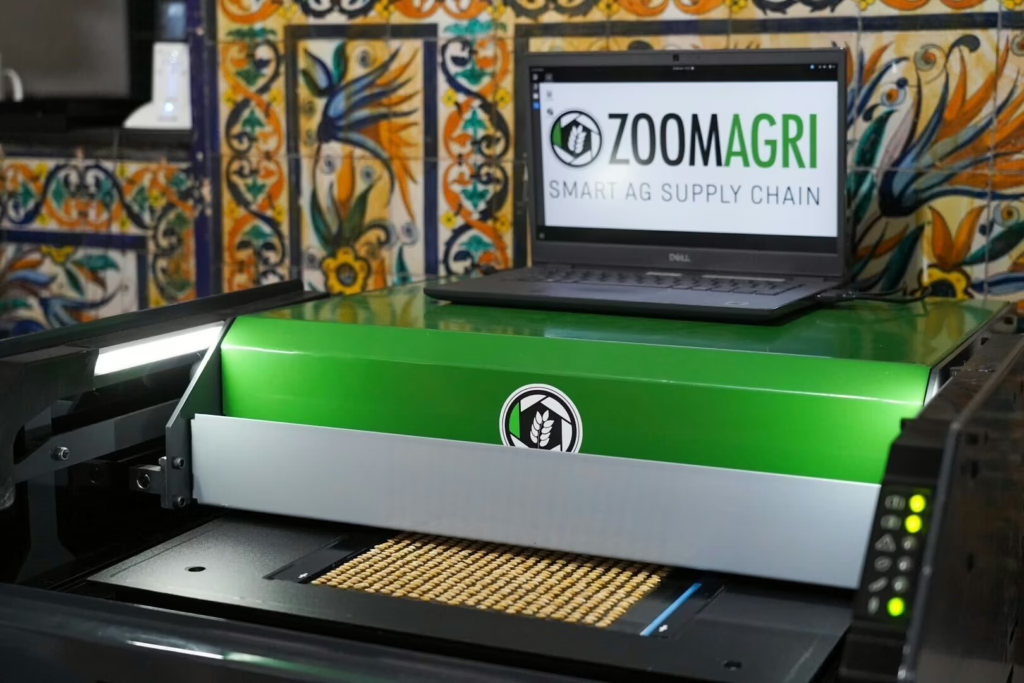
Recently, SaskBarley funded a project at the Canadian Malting Barley Technical Centre (CMBTC) to evaluate a new approach: ZoomAgri, an Argentinian ag-tech company using image processing and artificial intelligence to rapidly assess varietal purity in malt barley.
The goal is simple — deliver a fast, cost-effective, real-time purity assessment that complements DNA testing and gives the malting industry (and growers) quicker information when it matters most.
Specifically, the project set out to determine:
- Whether ZoomAgri’s platform can accurately identify Canadian barley varieties
- How its results compare to traditional DNA-based testing
- The system’s accuracy, precision, and repeatability
This phase of the project is considered preliminary — but early results are promising.
Training the Algorithm on Canadian Varieties
The first step was teaching ZoomAgri’s AI to recognize individual barley varieties. Pure-line samples of several well-known Canadian malting varieties were used to build the initial algorithm, including:
- AAC Connect
- CDC Copeland
- AAC Synergy
- AC Metcalfe
- CDC Churchill
- CDC Fraser
The next phase is already underway. Algorithm development and data collection are in progress for additional varieties, including:
- CDC Austenson
- Esma
- AAC Prairie
- AB Brewnet
- AB Dram
- Sirish
- Claymore
- Oreana
In short: the system is learning the Canadian barley lineup.
Early Results: Strong Accuracy
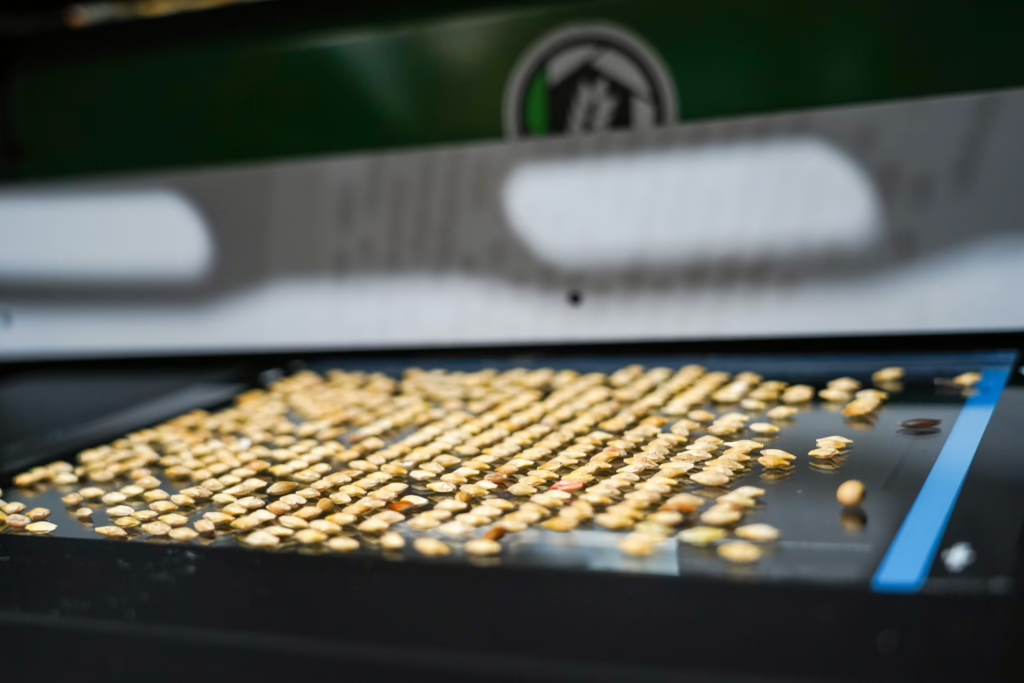
So far, ZoomAgri’s ability to correctly detect varieties has been consistently above 98%. When compared to DNA-based testing, results have generally landed within two to three percent of DNA outcomes — an encouraging level of agreement for a rapid, low-cost screening tool.
Initial testing on blended samples — where varietal mixtures are intentionally created — has also shown positive performance, suggesting the system may be able to handle real-world grain deliveries where minor mixing can occur.
More validation work is still required, but the direction is clear: this technology has real potential.
From Research to the Elevator Driveway
The project has now expanded into a trial hardware installation with four major malt barley buyers and malting companies. The long-term vision is practical and producer-focused:
Imagine pulling up to the elevator, taking a sample, and receiving a varietal purity result before the grain is dumped. Instant feedback. No waiting days for lab results. No uncertainty after delivery.
That kind of real-time information could:
- Provide more marketing flexibility for growers
- Reduce risk of unexpected discounts
- Improve efficiency for maltsters and elevators
- Lower overall testing costs across the system
Looking Ahead
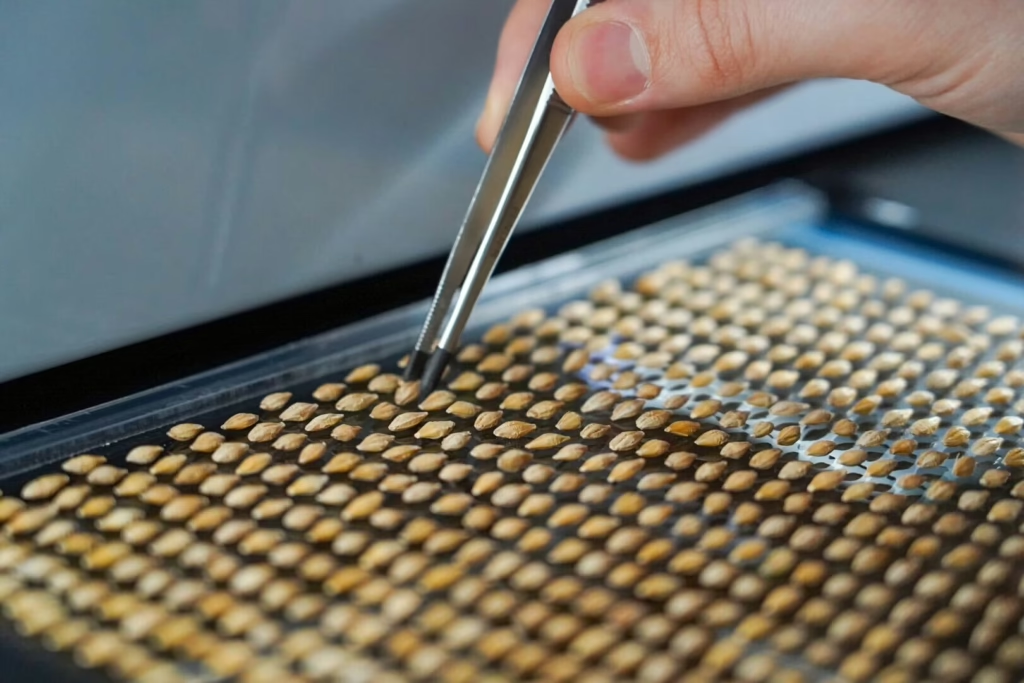
Further testing and validation are still required before widespread adoption. But to date, ZoomAgri’s AI-powered platform has delivered encouraging results — and represents exactly the type of innovation SaskBarley aims to support: practical solutions that improve efficiency, reduce costs, and strengthen market confidence in Saskatchewan malt barley.
The future of varietal purity testing may be arriving faster than expected — and this time, it might happen right in the driveway.
This article first appeared in the Spring/Summer 2024 edition of the BarleyBin Magazine.