Plant Growth Regulator (PGR) Options for Barley
Key Takeaways:
- Barley growers in Western Canada have two main plant growth regulator (PGR) options, Manipulator and Moddus, to help manage lodging risk in high-yielding barley.
- Research from Western Canada and international literature indicates barley is less responsive to chlormequat chloride (Manipulator) than to trinexapac-ethyl (Moddus), with Moddus showing greater reductions in plant height and improved standability.
- PGRs should only be used in highly productive, high-lodging-risk environments and not when crops are under environmental stress such as drought, waterlogging, or nutrient deficiency.
- Manipulator and Moddus must be applied at the correct growth stages (around Zadoks GS 30–33) to be effective, and label directions should always be followed carefully.
- Ethrel is not registered for use on barley, and growers should ensure they only use PGR products that are labeled for barley – especially if they wish to sell into the malt market.
PGR Options for Barley
Growers now have two plant growth regulator (PGR) options to help mitigate lodging risk in barley. Both Manipulator and Moddus are registered for use on barley in Canada, and many growers are asking which is the right choice for their farm.
Manipulator (chlormequat chloride) was first available to barley growers in 2020, while Moddus (trinexapac-ethyl) became available for the first time in 2021. Researchers in Western Canada and internationally have been evaluating crop response to both products.
What the Research Says About Barley’s Response to PGRs
Scientific literature from Western Canada and abroad generally favours the use of Moddus on barley. An international review by Rademacher (2015) reports that barley is less responsive to chlormequat chloride (the active in Manipulator) and mepiquat chloride than crops such as wheat, rye, triticale, or oats. The review concludes that products containing trinexapac-ethyl (the active in Moddus), prohexadione-calcium, or the ethylene-releasing ethephon are preferentially used to reduce lodging risk in barley.
Western Canadian research on CDC Copeland barley, conducted at five locations over three years, also found that trinexapac-ethyl (Moddus) produced the greatest number of lodging reductions. The magnitude of lodging reduction achieved with Moddus indicates strong potential for its use in barley. These studies evaluated PGR applications between Zadoks growth stages 30–33 for chlormequat chloride and trinexapac-ethyl, and GS 37–49 for ethephon.
Western Canadian field results with Moddus and Manipulator
Alberta research in 2018 at Barrhead, St. Albert, and Vermilion examined AAC Synergy and CDC Copeland barley treated with Manipulator and Moddus at label rates at GS 31–32.
Key findings included:
- Manipulator reduced plant height by an average of 3 cm.
- Moddus reduced plant height by an average of 10 cm.
- Lodging was minimal overall, but CDC Copeland showed slight lodging at Barrhead. At this site, Moddus significantly improved standability compared with the untreated control.
- Manipulator did not significantly improve standability relative to the untreated control in that trial.
These results align with broader literature indicating stronger lodging reduction and height reduction in barley with trinexapac-ethyl (Moddus) compared to chlormequat chloride (Manipulator).
When PGRs Make Sense – and When They Do Not
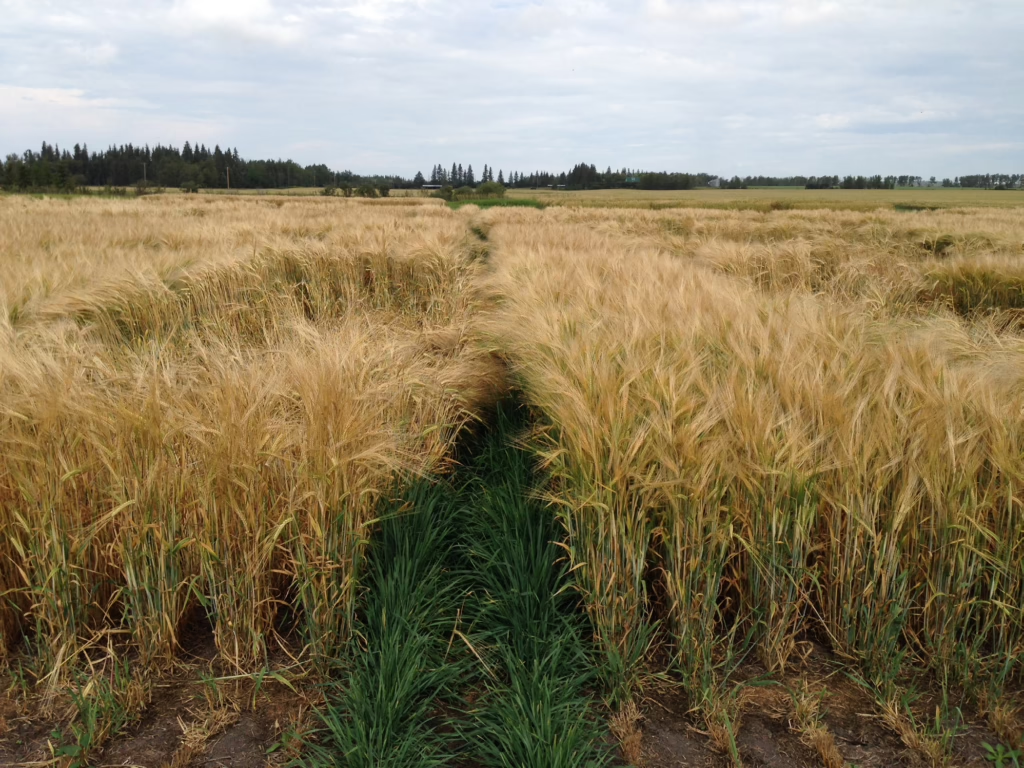
PGRs are designed to help manage lodging risk in highly productive environments where agronomic inputs are geared towards high yields or where the variety does not have sufficient genetic lodging resistance. These situations tend to have a higher inherent risk of lodging.
However, this does not mean PGRs should be used every year, even on high-input farms. If environmental conditions are not conducive to lodging—for example, under drought stress—PGRs should not be applied.
The Moddus label states: “Due to risk of injury to barley, avoid overlapping application and do not apply to barley that is environmentally stressed.” The Manipulator label states: “DO NOT apply Manipulator 620 to crops under stress from waterlogging, drought or nutrient deficiency.” In these stressed situations, the best choice is often to skip a PGR application altogether.
Product Labels and Registration Considerations
The Manipulator 620 label indicates it is “for treatment of spring, durum and winter wheat, spring and winter barley, and spring and winter oats to manipulate apical dominance and produce shorter, thicker, stronger stems for improved lodging resistance.” Manipulator contains the active ingredient chlormequat chloride.
The Moddus label indicates it “will aid in the growth and lodging management of wheat, barley, and oats.” Moddus contains the active ingredient trinexapac-ethyl.
It is also important to note that the Ethrel PGR label does not include barley, meaning Ethrel is not registered for use on this crop.
Understanding Growth Stages for Effective PGR Application
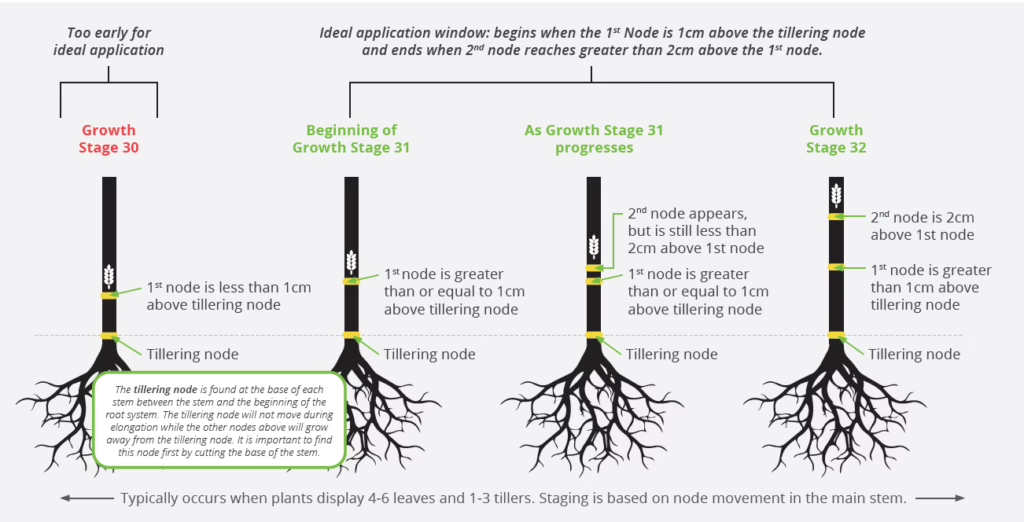
To achieve the most value from a PGR application, growers must time applications correctly based on crop growth stage. The barley and wheat PGR trials referenced here used the Zadoks scale, focusing on node development.
For Manipulator and Moddus, the ideal application window is around growth stages 31–32, when:
- The first node on the main stem is at least 1 cm above the tillering node (beginning of GS 31).
- The window closes once the second node is more than 2 cm above the first node (end of GS 32).
This stage typically occurs when plants have 4–6 leaves and 1–3 tillers, and staging is based on node movement on the main stem. The tillering node is located at the base of each stem between the stem and the beginning of the root system; it does not move during stem elongation, while the nodes above it move away as the plant grows. Proper staging involves finding this node by slicing the base of the stem.
In summary, to ensure the most value from your PGR application, consider both environmental conditions and select the most appropriate product for the intended crop. In the case of barley, Moddus has shown to have better efficacy in reducing heights and improving standability.
Please follow all label directions for the application of plant growth regulators.
For more information on PGRs, check out these resources, or contact:
Mitchell Japp, M.Sc., P.Ag.
Research & Extension Manager
Saskatchewan Barley Development Commission
mjapp@saskbarley.com
This information was pulled from Plant Growth Regulator (PGR) Options for Barley (2021) a joint effort between Alberta Barley (now Alberta Grains), SaskBarley and Manitoba Crop Alliance. For the full list of references to this research, please download the PDF.