
Discover SaskBarley’s 2025 Research Projects
New Barley Research Projects Powering Progress Across the Prairies
By Mitchell Japp, Research and Extension Manager
Saskatchewan barley producers are set to benefit from a fresh wave of research and innovation, thanks to strategic investments in breeding, agronomy, and sustainability. From enhancing feed barley yields, refining genomic selection and optimizing nitrogen management practices to supporting the development of new varieties, these projects reflect a strong commitment to advancing barley production. With collaboration from leading institutions like the Crop Development Centre, Agriculture and Agri-Food Canada, and Western Crop Innovations, the 2024–25 research portfolio is poised to deliver practical, on-farm benefits for growers across the Prairies.
Here is a summary of a few of our new research projects from 2024/25:
Core Breeding Agreements
Crop Development Centre, Aaron Beattie
Agriculture and Agri-Food Canada, Ana Badea
SaskBarley Commitment: $1,478,747
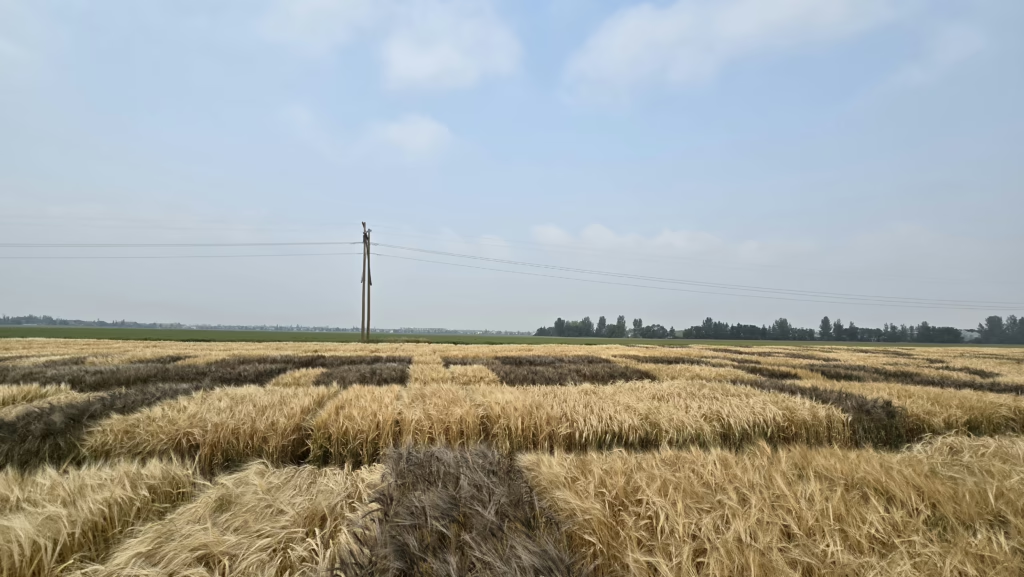
The Canadian Barley Research Coalition (CBRC) combines the barley variety development interests of SaskBarley, Alberta Grains and Manitoba Crop Alliance. The CBRC manages the core breeding agreements, initiated decades ago, with the Crop Development Centre and Agriculture and Agri-Food Canada’s barley breeding programs. Previous iterations of the agreement have led to the development of popular and new barley varieties, including CDC Durango, CDC Churchill, AAC Prairie, AAC Lariat and AAC Stockton. The core breeding agreements provide direct farmer input into the breeding programs, with deliverables that result in improved varieties that add value on barley farms.
Plant Growth Regulator Mixes to Improve Crop Safety and Efficacy in Barley
Indian Head Agricultural Research Foundation (IHARF), Chris Holzapfel
SaskBarley Commitment: $30,000 – co-funded by ADOPT

Adapted from the similar, one-year project in 2024, this project includes Plant Growth Regulators (PGRs) alone and in combination to evaluate efficacy on four popular malt barley varieties. Lodging management is an ongoing challenge in barley production. The recent introduction of two PGR products – chlormequat chloride (Manipulator) and trinexepac ethyl (Moddus) improved agronomic options for lodging management, but there is a need to learn more about crop safety and efficacy across a range of conditions. Using the two PGRs in combination has been reported in Europe – this project evaluates the merits of the practice in Saskatchewan.
Find interim results from 2024 here: Are Plant Growth Regulators (PGRs) Worth It for Your Barley Crop?
This project was supported by the ADOPT program. Financial support was provided under the Sustainable Canadian Agricultural Partnership, a federal-provincial-territorial initiative.
Western Crop Innovations Support
Western Crop Innovations, Yadeta Kabeta
SaskBarley Commitment: $50,000
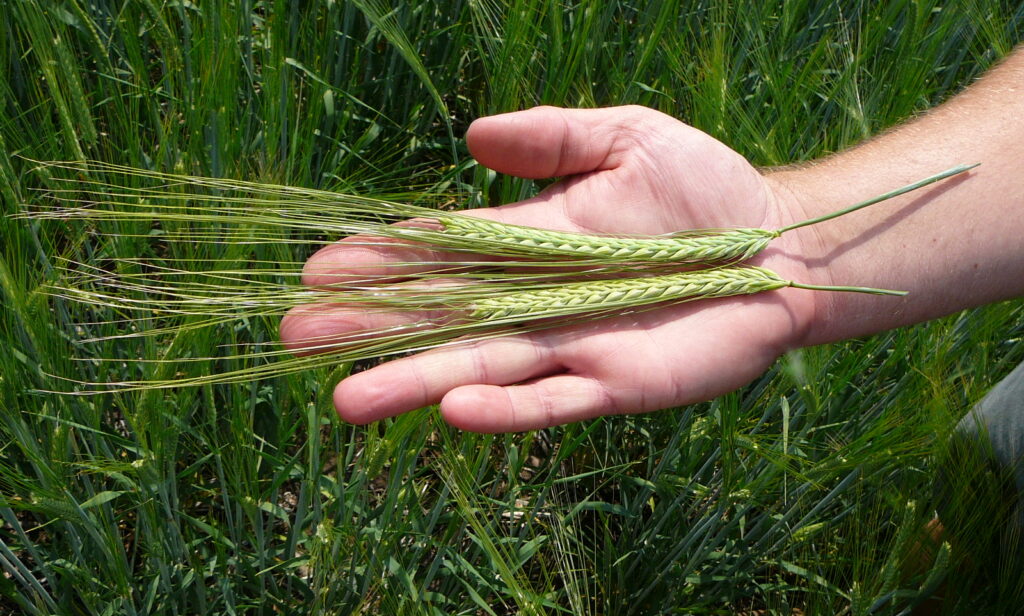
In 2024, the Field Crop Development Centre in Lacombe transitioned from Olds College to a stand-alone entity – Western Crop Innovations, focused on developing feed varieties, including feed barley as a central core of their program. Now, as WCI, their recent varieties include AB Advantage, AB Hague, AB Maximizer and AB Standswell. WCI has the largest feed barley breeding program in Canada. This funding supports the breeding activities at WCI.
Spring-thaw nitrous oxide emissions from a barley agricultural system in response to nitrogen fertilizer rates and sources
Agriculture and Agri-Food Canada, Pedro Ferrari Machado
SaskBarley Commitment: $61,715
A separate agronomy project led through AAFC created an opportunity for this project to efficiently utilize the plots and add to our knowledge of nitrogen efficiency and risks of losses in barley production. We know that Saskatchewan and Western Canadian barley production is very sustainable compared to other areas in the world. Continuing to evaluate sources and magnitudes of loss can lead to efficiency improvements for farmers, that also can improve on the positive sustainability record here in Saskatchewan. This project will increase our understanding of early season nitrogen losses as nitrous oxide in barley production.
Applying genomic selection to enhance yield, lodging and disease resistance, and breeding efficiency in feed barley variety development.
Global Institute for Food Security, Wendy Lyzenga
SaskBarley Commitment: $53,644
The overall goal of this project is to support Western Crop Innovation’s goal of a 15% increase in feed barley yields by 2030. Genomic selection is an important tool for breeders to be able to make optimal crosses and make good selections early in the breeding cycle to achieve the goals they need for their breeding program. In order to achieve these outcomes, this project will initiate a genotyping pilot, collect phenotypic data, genotype breeding lines and develop a model to predict outcomes for lines that the breeder can use as a tool to assist in selection.
FHB risk maps data collection 2025
Northeast Agriculture Research Foundation (NARF), Brianne McInnes
SaskBarley Commitment: $4,000

The Prairie Fusarium Head Blight Risk Mapping Tool was developed at the University of Manitoba and launched for prairie farmers and agrologists in 2024. The development of this important risk management tool required years of data collection for multiple crop types across the prairies. That data collection is continuing under this project. Continuing to collect data allows the tool to be continually calibrated to shifts in the Fusarium species and chemotypes currently active on the Prairies.
Learn more:
- Navigating the New FHB Risk Mapping Tool
- Managing Fusarium in Barley: Insights from Dr. Kelly Turkington
- Assessing Risk of Fusarium Head Blight in Barley
- Season 1, Episode 2: Scourge of Barley Quality and Yield: Managing Fusarium Head Blight – with Dr. Kelly Turkington (AAFC)
4R Management: Can split applications be managed in malt barley to reduce risk and maintain yield and quality?
Northeast Agriculture Research Foundation (NARF), Brianne McInnes
Funded by ADOPT and BMBRI

Split nitrogen applications are always an interesting topic to discuss in Saskatchewan. There are some who think it works great, while others remain skeptical. Regardless, little research has been conducted using split-applications in malt barley production. The risk of inadvertently exceeding acceptable grain protein levels has contributed to the limited research on this topic. This project evaluates split N applications for yield and malt quality. Effectively managing N fertility is critical in malt barley production. The results from this project can help farmers manage risk and maintain yields. This project was supported by the ADOPT program and BMBRI. Financial support was provided under the Sustainable Canadian Agricultural Partnership, a federal-provincial-territorial initiative.
As the barley industry continues to evolve, SaskBarley’s research investments are laying the groundwork for a more resilient, productive, and sustainable future. These projects not only address current challenges—like lodging, nitrogen efficiency, and disease risk—but also position Canadian barley producers at the forefront of global innovation. With farmer-driven priorities and science-backed solutions, the future of barley in Western Canada looks bright.